

As operating frequencies rise and devices shrink, antenna performance increasingly depends on packaging and materials. Traditional designs used discrete antennas assembled onto printed circuit boards. Today, antenna-on-chip (AoC) integrates radiators directly into the semiconductor die, eliminating lossy flip-chip interconnects. AoC structures can take the form of dipoles, monopoles, inverted-F, Yagi-Uda, slot or patch antennas, fabricated using CMOS, SiGe BiCMOS, SiC, GaAs or InP technologies. Antenna-in-package solutions with glass-core substrates provide fine-pitch interconnects, a matched coefficient of thermal expansion, excellent electrical resistivity and low dielectric loss. These properties make glass substrates attractive for 5G/THz modules, enabling 2.5D structures where interposers route signals laterally and vertically.
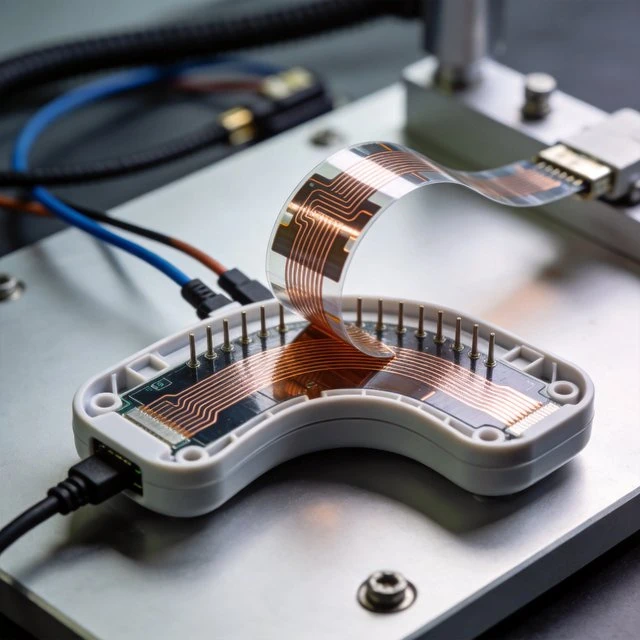
Beyond rigid silicon, researchers are exploring flexible and conformal antennas for wearable electronics. A recent study in Frontiers in Physics developed a dual-band inverted-F antenna by injecting eutectic liquid metal into polydimethylsiloxane (PDMS) microchannels. The resulting antenna operates at 2.4 GHz and 5.8 GHz; the liquid metal filling technique creates a monolithic, stretchable substrate that maintains conductive continuity during bending. Such liquid-metal antennas can be moulded around curved surfaces, enabling antennas integrated into wristbands, garments and medical devices. For higher-frequency wearables, materials like liquid crystal polymers and flexible glass may provide low-loss performance while retaining mechanical flexibility.
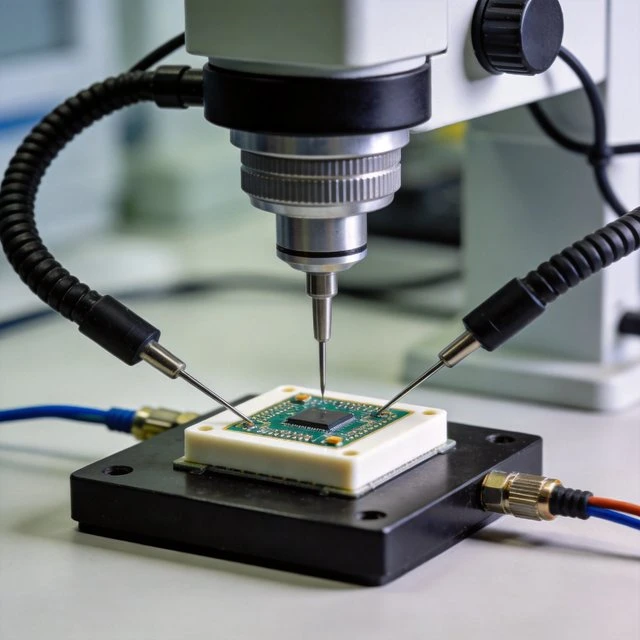
Sustainability concerns are driving a search for natural-fiber substrates. A 2026 Materials Research Express study proposed stacked bamboo-pineapple fabric mats as biodegradable super-substrates for wearable antennas. The bamboo mat exhibited a dielectric constant of 3.92 and a moisture-vapor transmission rate (MVTR) of 1 780 g m⁻², while the pineapple mat had ε_r of 3.68 and an exceptionally high MVTR of 15 440 g m⁻². When combined into a stack, the substrate had ε_r ≈ 3.8 and a loss tangent of 0.015. Patch antennas fabricated on this eco-friendly substrate resonated at 2.66 GHz and 3.43 GHz, achieving gains of 5.25 dBi and 5.68 dBi, respectively. The antennas could bend up to 70 degrees without degradation, and specific absorption rate (SAR) simulations showed values below 1 W kg⁻¹. Such results suggest that natural fibres can replace petroleum-based laminates in future wearable antennas.
Biodegradable polymers also offer sustainable options for antenna packaging. Polylactic acid (PLA) is a bioplastic derived from renewable feedstocks such as corn and sugarcane. It decomposes into natural elements when composted and has high mechanical strength, optical clarity and a low processing temperature, making it attractive for electronic components. PLA dominated the market for biodegradable bioplastics in 2021, reflecting well-established production infrastructure. However, PLA is brittle and often blended with flexible polymers like polybutylene adipate terephthalate (PBAT) to improve ductility. Combining PLA with glass-core substrates or natural-fiber mats could yield antenna packages that are both high-performance and eco-friendly.
These packaging and material innovations are not isolated; they interplay with advanced manufacturing methods such as additive manufacturing, laser direct structuring and self-assembly. Engineers must evaluate trade-offs among electrical performance, mechanical robustness, thermal stability, sustainability and cost. The move toward sub-THz operation further amplifies these challenges because packaging parasitics become a dominant factor at very high frequencies. Success will depend on co-designing antennas with semiconductor devices, materials and assembly processes to ensure that performance gains from advanced materials translate into reliable products.
FAQ
What is antenna-on-chip (AoC)?
AoC integrates the radiator directly into the semiconductor die, eliminating lossy flip-chip interconnects. AoC structures can take the form of dipoles, monopoles, inverted-F, Yagi-Uda, slot, or patch antennas, fabricated using CMOS, SiGe BiCMOS, SiC, GaAs, or InP technologies.
Why are glass-core substrates attractive for 5G and THz modules?
Antenna-in-package solutions with glass-core substrates provide fine-pitch interconnects, a matched coefficient of thermal expansion, excellent electrical resistivity, and low dielectric loss, enabling 2.5D structures that route signals laterally and vertically.
Can antennas be made from flexible or sustainable materials?
Yes. Researchers have built stretchable dual-band antennas operating at 2.4 GHz and 5.8 GHz by injecting liquid metal into PDMS microchannels, and a biodegradable bamboo-pineapple fabric substrate produced patch gains of 5.25 and 5.68 dBi while bending up to 70 degrees.
What trade-offs do advanced packaging materials involve?
Engineers must balance electrical performance, mechanical robustness, thermal stability, sustainability, and cost, especially as the move toward sub-THz operation makes packaging parasitics a dominant factor at very high frequencies.
GNSS integration
Need help choosing a GNSS or patch antenna?
Tell us your device size, ground plane, constellation, cable and mounting requirements. We can help match active, passive or embedded GNSS antenna options.
References
- History and Latest Progress in Antenna Packaging Technology: Part 2
- Liquid Metal-Embedded Layered-PDMS Antenna for Flexible and Conformal Applications
- Stacked natural-fiber fabric mats as green super-substrates
- Polylactic Acid (PLA)-Based Bioplastics
Ready to specify a product?
Get product suggestions and quotation details for your application.
Tell us your device size, ground plane, constellation, cable and mounting requirements. We can help match active, passive or embedded GNSS antenna options.