
Your LoRaWAN antenna decides which band you may legally transmit in, the shape of your coverage, and a large share of the range you will actually measure in the field. Picking one is five decisions — not a hunt for the biggest dBi number on the shelf.
Short answer
- Band first. 863–870 MHz in Europe, 902–928 MHz in North America. A band mismatch is the most common field failure we see.
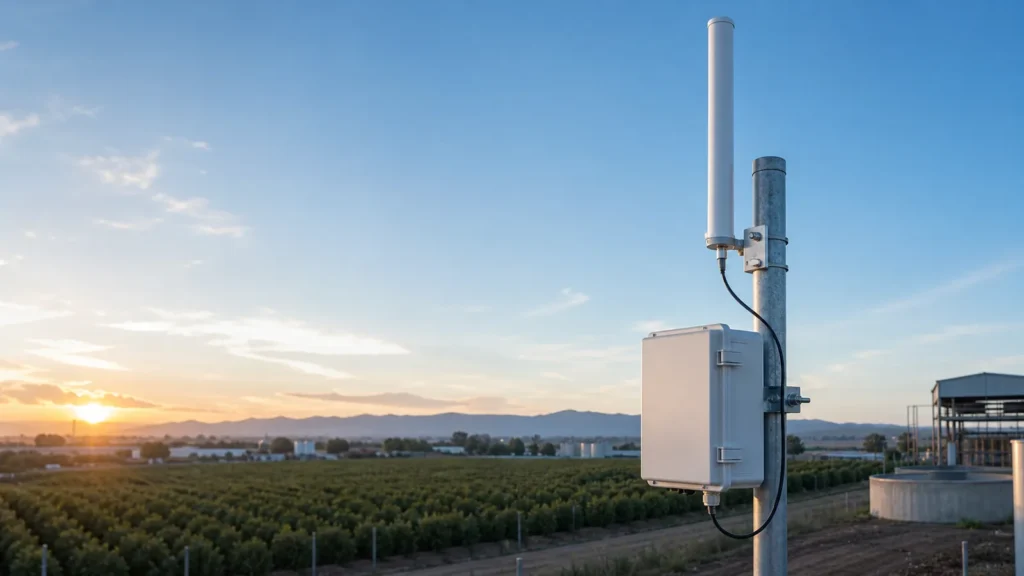
- Gateway: a 3–6 dBi omni mounted high and clear. Go higher only on genuinely flat terrain.
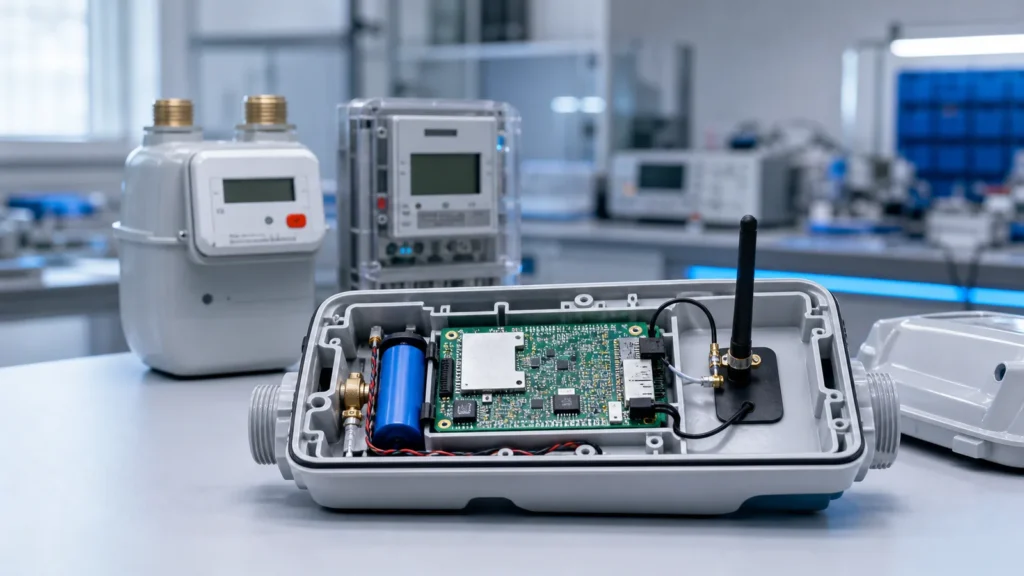
- Node: 0–3 dBi with a wide pattern, validated inside the finished enclosure.
- Gain is not free. Europe caps radiated power (25 mW ERP), and US rules claw back transmitter power above 6 dBi — so extra gain can cost you the power you thought you were adding.
- Height beats gain. Raising a gateway a few metres usually buys more range than 3 extra dBi.
LoRa vs LoRaWAN in one minute
LoRa is the radio technique: chirp spread spectrum, which trades data rate for sensitivity so a receiver can decode signals buried below the noise floor. LoRaWAN is the network protocol on top — it defines how end nodes talk to gateways, which channels each region uses, and how devices behave.
For antenna selection the difference barely matters: a “LoRa antenna” and a “LoRaWAN antenna” are the same sub-GHz hardware. What matters is the regional channel plan your network runs on, because that sets the band the antenna must be tuned for. The channel plans are defined in the LoRa Alliance regional parameters specification (RP002).
What the antenna actually does to your link budget
A LoRa link closes when transmit power plus antenna gains overcome path loss and still land above the receiver’s sensitivity. The spreading factor buys sensitivity; the antenna is where you win or lose the rest.
You can check the arithmetic yourself. Free-space path loss (the best case, with nothing in the way) is:
FSPL (dB) = 20·log₁₀(d in km) + 20·log₁₀(f in MHz) + 32.45
At 915 MHz over 5 km that is about 105.7 dB; at 10 km, about 111.7 dB. Two consequences fall straight out of the formula:
- Doubling the distance costs 6 dB. So every 6 dB you gain or waste roughly doubles or halves line-of-sight range.
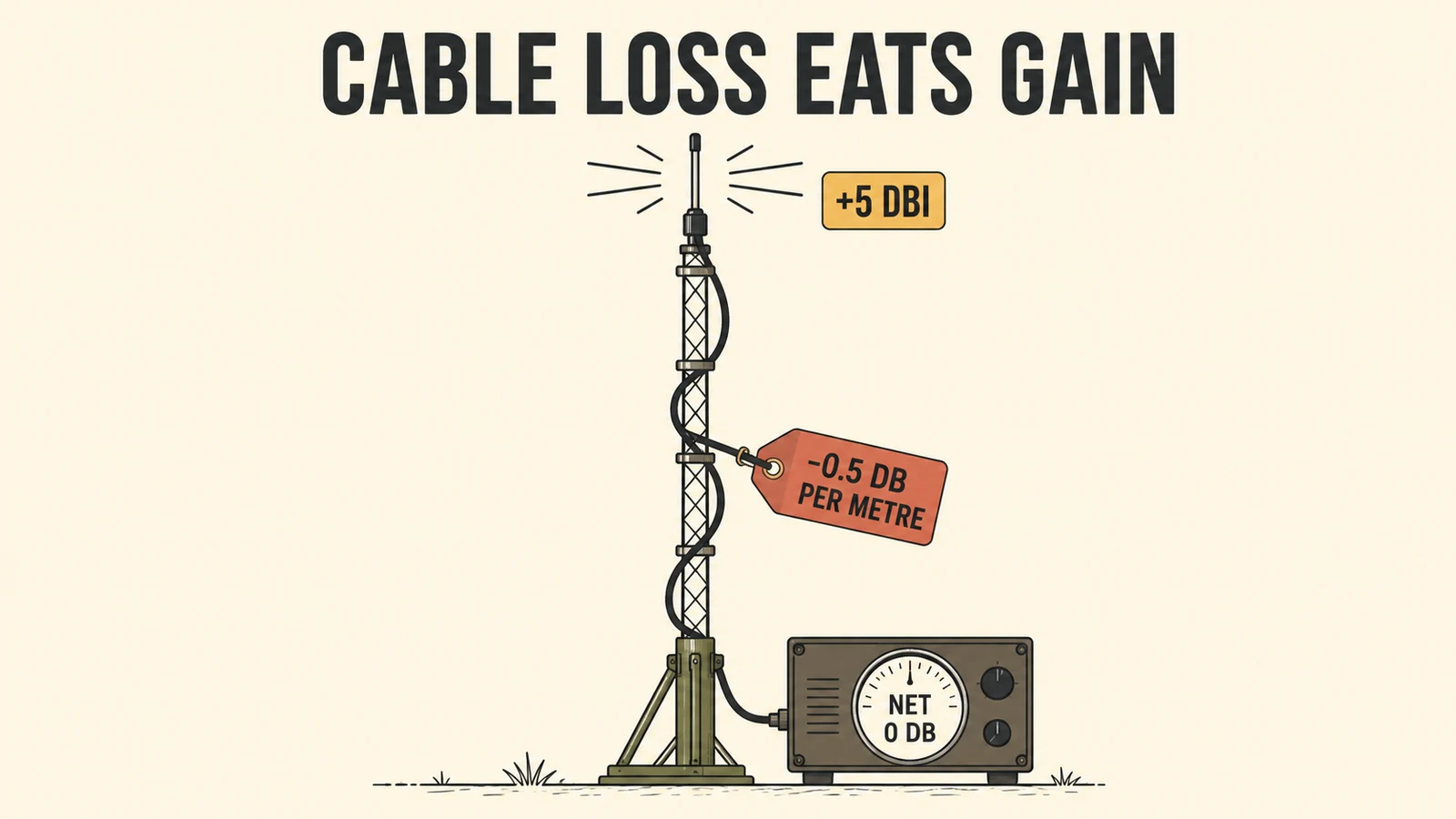
- Antenna gain and cable loss trade one-for-one against distance. A detuned antenna and a lossy pigtail can easily throw away that same 6 dB.
These are engineering estimates, not measured results — real deployments add obstruction, foliage and multipath losses on top. But they are enough to tell you whether a plan is plausible before you buy hardware.
If a deployment underperforms, check band, cable loss and mounting height before touching spreading factors.
LoRa antenna frequency bands — and the legal ceiling behind them
Region decides the band, and regulation decides how much power you may radiate through the antenna you chose. Most antenna guides stop at the first half.
| Region | Band | Power limit | Channel access |
|---|---|---|---|
| Europe (EU868) | 863–870 MHz | 25 mW ERP in the main sub-bands, 500 mW ERP in 869.4–869.65 MHz | 1% duty cycle (0.1% in some sub-bands, 10% in 869.4–869.65 MHz), or polite spectrum access |
| North America (US915) | 902–928 MHz | 1 W conducted output power for digitally modulated systems | Frequency hopping / wideband spreading, no duty cycle limit |
The European figures come from the harmonised short-range-device rules in ETSI EN 300 220-2 and CEPT ERC 70-03; the US figure is 47 CFR §15.247.
Two things this table changes about antenna selection:
1. In Europe the limit is radiated, so antenna gain eats your transmit power. 25 mW ERP is 14 dBm measured after the antenna. Bolt a 6 dBi gateway antenna onto a 14 dBm radio and you are roughly 4 dB over the ceiling once you convert dBi to ERP (EIRP = ERP + 2.15 dB), so the conducted power has to come down. High gain in the EU buys you pattern shape and receive performance, not more radiated power.
2. In the US the limit is conducted, but only up to 6 dBi. §15.247 allows 1 W conducted, and antennas above 6 dBi require the transmitter power to be reduced dB-for-dB by the excess gain. The 1 dB-per-3 dB concession applies only to fixed point-to-point links, which explicitly excludes point-to-multipoint and omnidirectional use — that is, it excludes every normal LoRaWAN gateway. So a 10 dBi gateway omni on a US network is a 4 dB power cut on the uplink side of the budget, and legally so.

Practical reading: on uplink-limited networks (most sensor deployments) high gateway gain still helps, because receive gain is not regulated. On downlink-heavy networks — confirmed uplinks, frequent OTA config, Class C actuators — chasing gain can quietly shrink your usable coverage. In Europe, the 869.4–869.65 MHz sub-band with its 500 mW ERP and 10% duty cycle is the one place you can spend real power on downlinks, and it is worth checking that your gateway and antenna are actually clean there.
One more band detail that costs people range: specify the full band, not the centre frequency. US915 hops across 902–928 MHz, so an antenna resonant only at exactly 915 MHz is mismatched on the edge channels — and those are the channels that carry traffic like any other. Ask for VSWR across the whole band, not a single-point number.
Types of LoRa antennas
Size is set by physics, not by marketing. A quarter-wave element is about 75 / f (MHz) metres long, shortened a few percent by the plastic and the ground plane around it:
- 868 MHz: roughly 8.2–8.6 cm
- 915 MHz: roughly 7.8–8.2 cm
- 433 MHz: roughly 16–17 cm
That is why any “LoRa antenna” much shorter than 8 cm is either a loaded design (lower efficiency, narrower bandwidth) or an embedded antenna that borrows your PCB copper as the other half of itself.
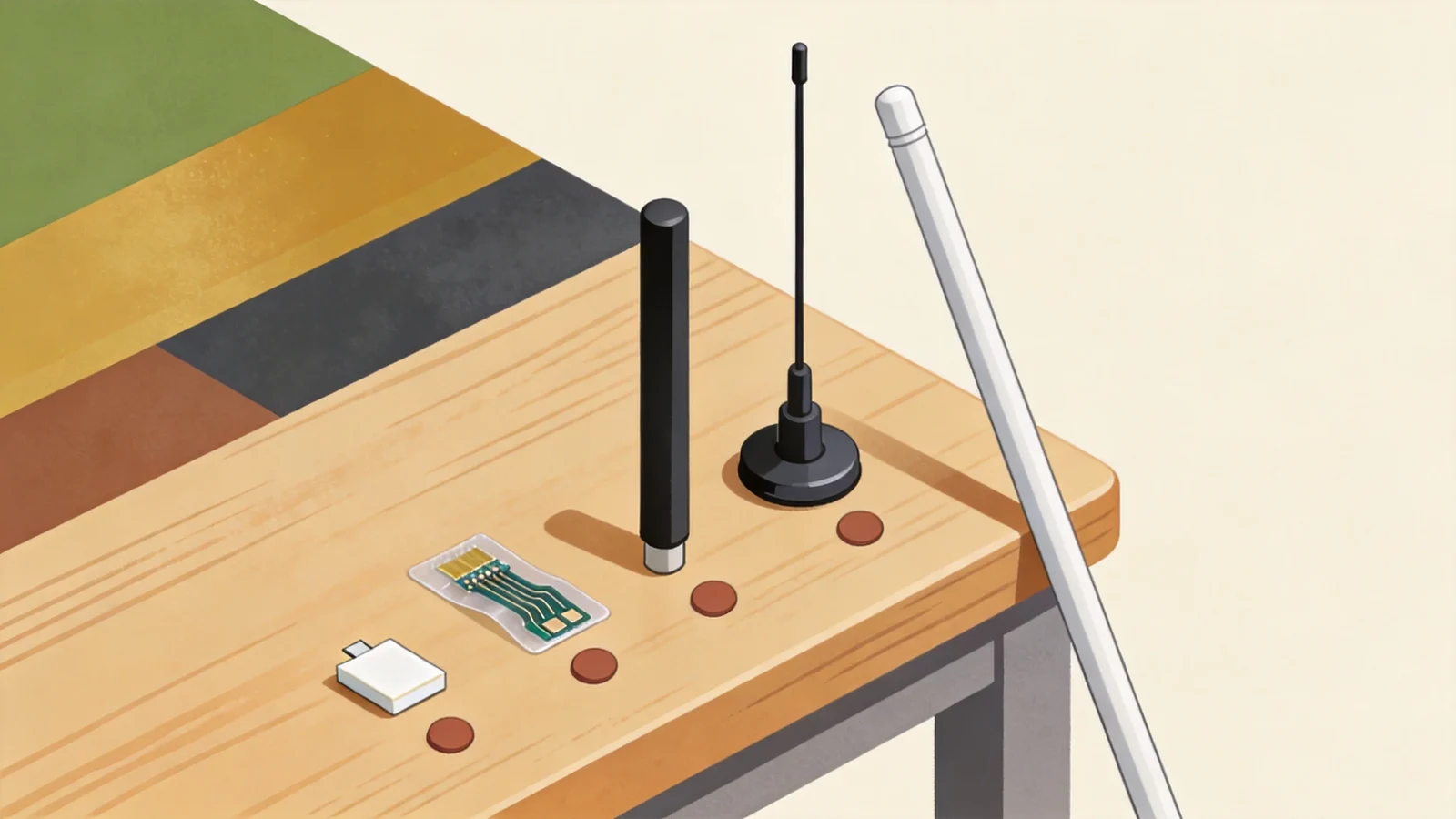
The families you will actually choose between:
- Ceramic chip and PCB trace antennas — smallest, cheapest, most dependent on board layout. Efficiency lives or dies by ground-plane size and keep-out area.
- Rubber duck / whip (SMA) — the default node antenna. Typically 0–3 dBi, monopole, needs a counterpoise.
- Magnetic mount — a monopole that uses the metal surface it sits on as its ground plane. On plastic it loses several dB.
- Fiberglass collinear omni — the standard gateway antenna. Dipole-based, carries its own counterpoise, 3–8 dBi, outdoor-rated.
- Directional (Yagi, panel) — for fixed point-to-point backhaul or covering a single corridor or valley. Not for gateways serving nodes in every direction.
Gateway antennas vs node antennas
The same network needs two different antenna philosophies.
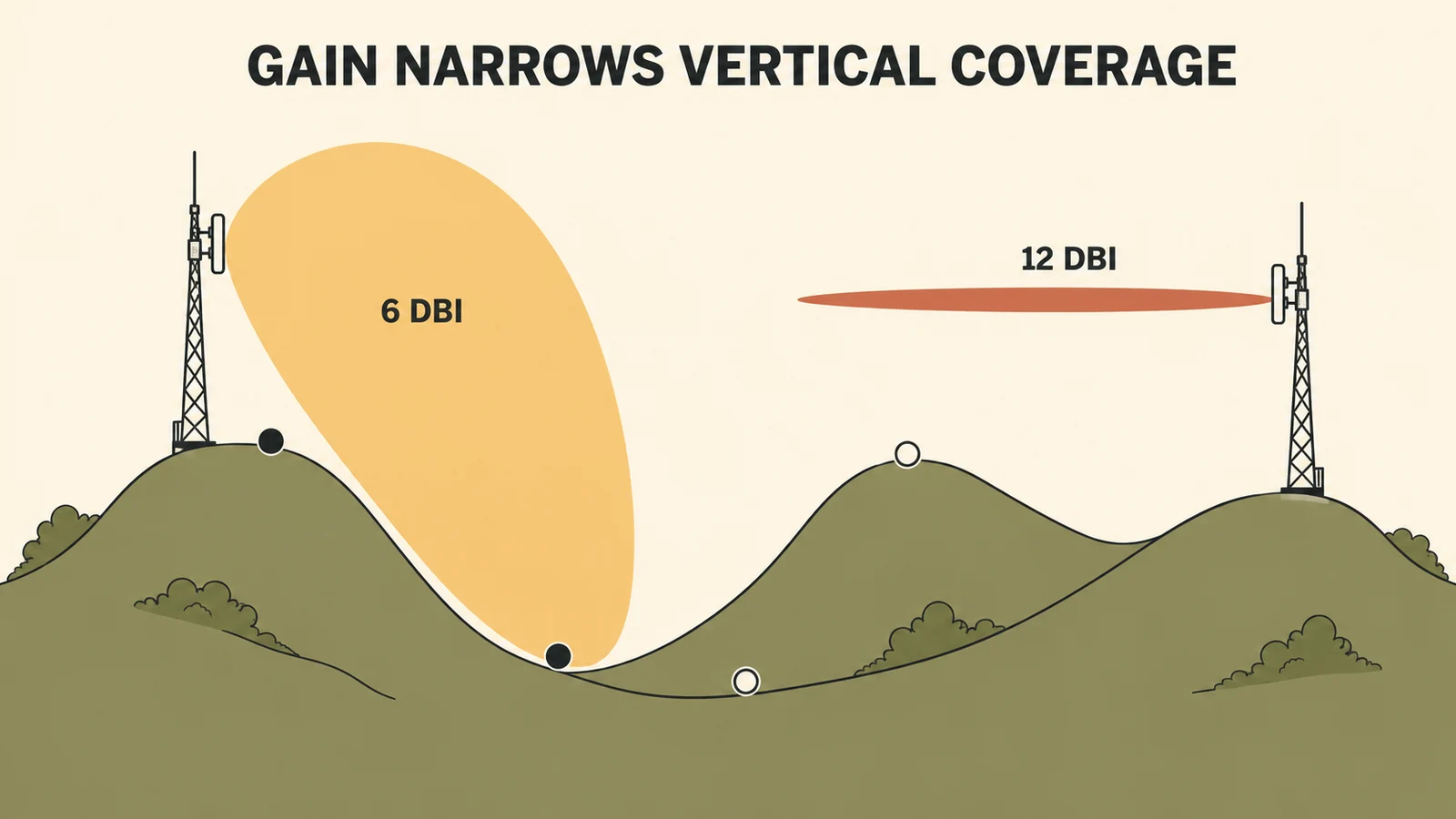
Gateways serve hundreds of nodes scattered in every direction, so they want an elevated omnidirectional antenna — typically a 3–8 dBi fiberglass collinear on a mast. Resist the urge to buy the highest gain available. An omni makes gain by squeezing energy out of the vertical plane into a thinner horizontal disc: a 3 dBi omni radiates over a broad vertical spread, while a 10–12 dBi collinear concentrates into a beam only a handful of degrees tall.
Do the geometry once and the trade becomes obvious. A gateway 30 m up with a very narrow vertical beam aimed at the horizon puts its main lobe above anything within a few hundred metres of the mast — so the nearest nodes, the ones on the same rooftop or in the basement below, sit in a null while a node 8 km away is served perfectly. On hilly ground or among high-rises the same effect leaves whole clusters unserved. In most mixed terrain a 5–6 dBi gateway antenna outperforms an 8–10 dBi one, and (see the section above) it also keeps you further from the regulatory power ceiling.
End nodes are battery-powered, enclosure-constrained and oriented unpredictably — flat on a pipe, upside down in a manhole, in a pocket. A modest 0–3 dBi antenna with a wide pattern is more robust than a high-gain option that must be aimed. For embedded antennas, the PCB layout — ground-plane size, keep-out area, matching network — matters more than the catalog gain figure.
LoRa antenna selection
Need a LoRa antenna matched to your range target?
Send us the band, gateway or node type, mounting environment and range target. We can recommend LoRaWAN antenna options for your deployment.
How antenna choice affects real range
Ignore the “up to 15 km” headlines and reason from conditions:
- Rural, line of sight, elevated gateway: 5–15 km with an ordinary 3 dBi node whip and a 6 dBi gateway omni.
- Suburban: 2–5 km typical.
- Dense urban: 1–3 km, driven by building penetration rather than antenna gain.
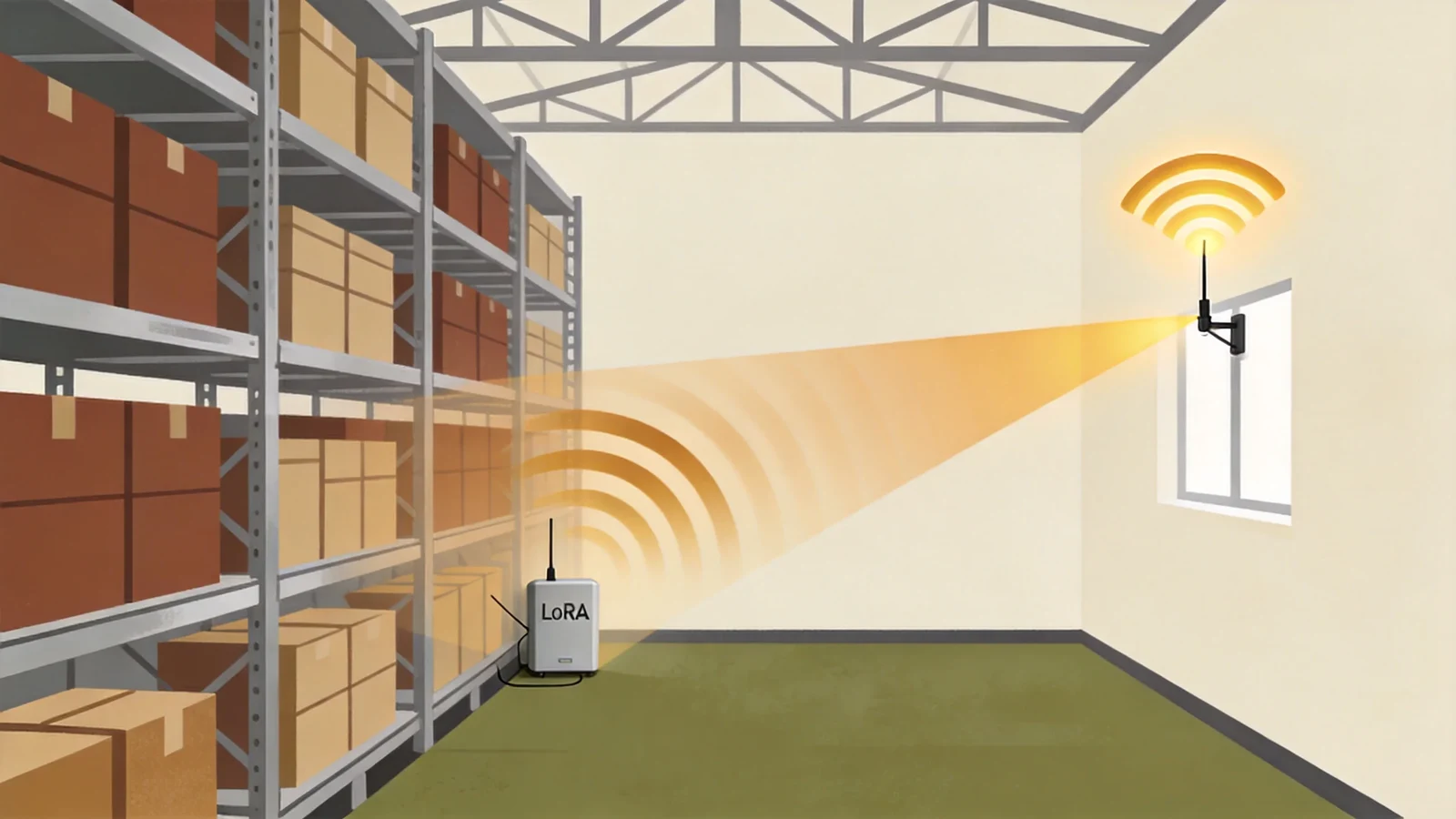
- Indoor-to-outdoor (meters in basements, sensors in steel cabinets): often the binding constraint. An external or window-mounted antenna helps far more than any gain increase.
The reason gain matters less than people expect is clearance. A radio link behaves like free space only if the ellipse-shaped Fresnel zone around the straight line between the antennas is mostly unobstructed; the accepted engineering rule is to keep at least 60% of the first Fresnel zone clear, using r = √(λ·d₁·d₂ / (d₁+d₂)) for the radius at any point along the path (Extreme Networks antenna guide).
At 868 MHz (λ ≈ 0.35 m) the midpoint radius of that zone on a 5 km link is about 20 m, and you want roughly 12 m of it clear. A tree line or a row of houses intruding into it costs far more than the 3 dB you were arguing about in the antenna datasheet. That is the arithmetic behind “raise the gateway 5 metres” — and behind the fact that a radio horizon of about 3.6·√h (km, h in metres) means a 10 m mast simply cannot see past ~11 km no matter what you screw onto it.

Common LoRa antenna mistakes
- Wrong band. EU antenna on a US network or vice versa. Symptom: everything works on the bench and at short range, then dies beyond a few hundred metres.
- Single-frequency tuning on a hopping band. Fine at 915.0 MHz, poorly matched at 903 and 927 MHz. Ask for VSWR across 902–928 MHz.
- No ground plane. A magnetic-mount monopole on plastic, or a rubber duck inside a plastic box with no counterpoise, loses several dB against its rating.
- Cheap coax on long runs. Thin RG174-class cable is lossy at 900 MHz — enough that ten metres of it can cancel a 5 dBi antenna outright. Use low-loss cable for mast runs, keep pigtails short, and get the loss figure for your specific cable at 900 MHz from its datasheet rather than assuming.
- High-gain omni in the wrong terrain. See the gateway section: a flat pattern misses nodes above and below, and in the US it also forces a legal power reduction.
- Antenna buried in the enclosure. Batteries, shields and cable bundles pressed against an internal antenna detune it. Validate on the finished product, not the bare board.
- Skipping VSWR validation after integration. Enclosure plastics shift resonance. A bench-perfect antenna can be badly matched once installed — measure it in place.
How to choose: a quick checklist
- Confirm the regional plan (EU868 / US915 / AS923…) → sets the band.
- Check the power rule that applies to it (ERP ceiling in the EU, the 6 dBi threshold in the US) → sets how much gain is actually useful.
- Node or gateway? → sets gain class and form factor.
- Indoor or outdoor? → sets IP rating and radome material.
- What ground plane exists? → decides between monopole types and dipole/collinear types.
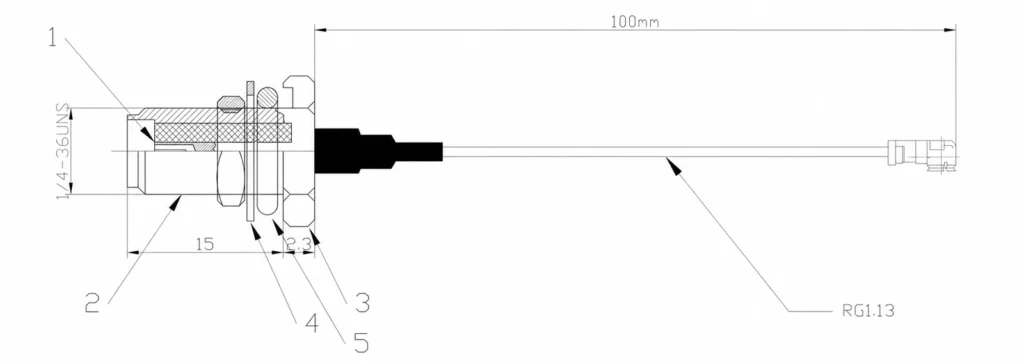
- Connector and cable run? → N-type outdoors, SMA/RP-SMA on equipment, u.FL embedded; budget the cable loss.
- Certification planned? → freeze the antenna before FCC/CE testing.
- One SKU for EU + US? → pick a wideband 863–928 MHz design and accept a small efficiency trade.
FAQ
Is 868 MHz or 915 MHz better for LoRa?
Neither — it is set by regulation, not preference. Europe uses 863–870 MHz, North America 902–928 MHz. Choose the band your deployment region requires and tune the antenna to it.
What gain antenna is best for a LoRa gateway?
For most deployments, 3–6 dBi mounted high and clear. Go to 8 dBi or more only on genuinely flat terrain where all nodes sit near the antenna’s horizontal plane — and check the power rule for your region first, because in the US antennas above 6 dBi require a matching reduction in transmitter power for point-to-multipoint use.
Does a high-gain antenna break FCC or ETSI rules?
Not by itself, but it changes what the radio is allowed to output. Under §15.247 gain above 6 dBi must be offset dB-for-dB by reduced conducted power for anything other than fixed point-to-point links. In Europe the limit is expressed as radiated power (25 mW ERP in the main LoRa sub-bands), so gain counts directly against the ceiling.
How far can LoRaWAN reach with the right antenna?
Kilometres, not the tens of kilometres in marketing copy: 1–3 km urban, 2–5 km suburban, 5–15 km rural line of sight. Gateway height and Fresnel clearance dominate the result.
Do LoRa antennas need a ground plane?
Monopole types — whips, magnetic mounts, most PCB traces — do; they use the enclosure, vehicle roof or board copper as the missing half of the antenna. Dipole-based fiberglass omnis carry their own counterpoise and do not.
Can one antenna cover both 868 and 915 MHz?
Yes — wideband 863–928 MHz designs exist and simplify multi-region BOMs. The trade-off is slightly lower efficiency than a single-band antenna: acceptable for most nodes, worth avoiding on range-critical gateways.
How much can I transmit in Europe with a 1% duty cycle?
1% of an hour is 36 seconds of transmit time per hour, or about 864 seconds per day per device; the 0.1% sub-bands allow roughly 86 seconds per day (The Things Network, EU868). This is a protocol and payload constraint, not an antenna one — but it is why adding power or gain cannot fix a network that is simply asking to send too much.
Conclusion
Antenna selection for LoRa comes down to six decisions: band, the power rule that applies to that band, node-vs-gateway role, ground plane, environment and cable. Get those right and a modest antenna delivers the range LoRa is known for. Get one wrong and no spreading factor will rescue the link. Browse our LoRa & LoRaWAN antenna range across 868 and 915 MHz, or send our engineering team your device details for a tuning and integration review.
Ready to specify a product?
Get product suggestions and quotation details for your application.
Send us the band, gateway or node type, mounting environment and range target. We can recommend LoRaWAN antenna options for your deployment.
Ask our AI antenna assistant. Enter a keyword or question for a free answer based on this article, Global RF Tech content, and general antenna/RF knowledge.
Do not submit confidential or personal information. Privacy Policy