By Rftech RF Engineering Team. Reviewed for antenna selection, RF integration, and cellular connectivity use cases.
A 5G MIMO antenna is a single antenna assembly that carries multiple radiating elements — usually two (2×2) or four (4×4) — so a 5G radio can send and receive several data streams at once over the same channel. More streams mean higher throughput and a steadier link, as long as the radio and the signal can actually use them. That is the whole idea in one paragraph. The rest is knowing when it helps and which configuration you need.
This is written for engineers and integrators choosing an antenna for a 5G or LTE device, router, gateway, or site, not for chasing a definition for its own sake. So alongside what MIMO is, you get the part that decides a design: when MIMO earns its cost and when a single antenna is the better call.
How a MIMO antenna works
MIMO stands for multiple input, multiple output. Instead of one path between transmitter and receiver, it opens several. Two mechanisms do the work:
- Spatial multiplexing splits the data into separate streams and sends them from different elements at the same time. This multiplies throughput.
- Spatial diversity sends related copies of the signal along different paths. If one path fades, another still arrives, which steadies the link.
For this to work, the element streams have to stay independent. MIMO antennas do that with dual polarization (commonly ±45°) and high isolation between ports. If the ports are poorly isolated, the streams interfere and the second stream stops earning its keep.
MIMO antenna vs a single (SISO) antenna
A single-input single-output (SISO) antenna has one element and one path. It is simpler and cheaper, and for a one-port module it is the correct choice. A MIMO antenna only pays off when the radio has matching ports and the signal supports more than one stream.
Put plainly: a modern 5G or LTE router with two or four antenna ports leaves capacity unused on a single antenna. A basic one-port sensor module gains nothing from MIMO except cost. Match the antenna to the radio, not to the spec-sheet that sounds more impressive.
What a 5G MIMO antenna is for
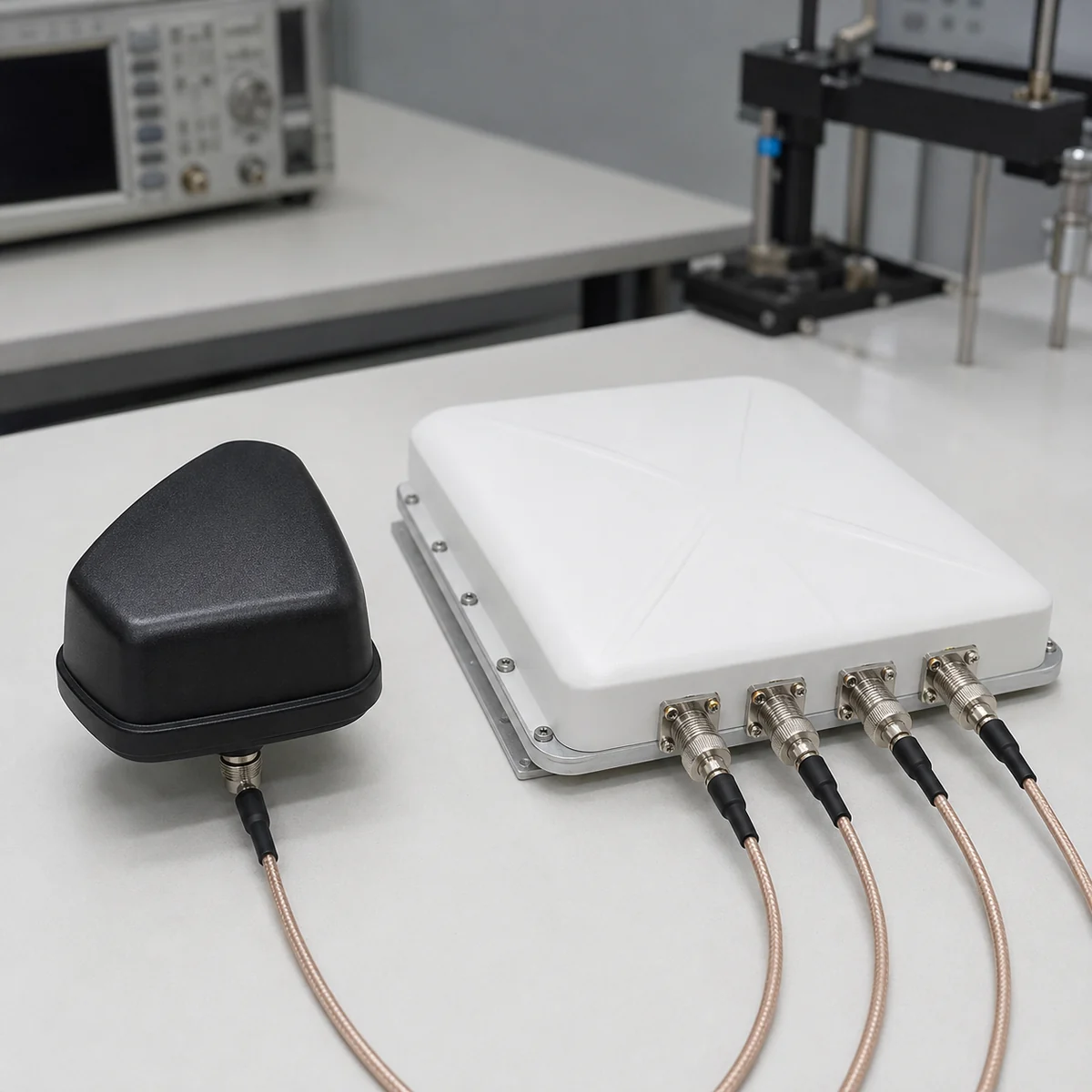
The point of MIMO is more throughput and a more reliable link without more spectrum or transmit power. By using several spatial paths in the same channel, it raises data rate and stability. That matters most where bandwidth is tight or the radio environment is noisy: dense urban cells, indoor coverage, moving vehicles, and fixed-wireless links.
Do MIMO antennas actually work?
Yes, within limits worth understanding. The benefit is real when the signal is strong enough to carry several usable streams. In good conditions, 4×4 can roughly multiply throughput over a single stream. In weak signal, the link falls back to fewer streams and that advantage shrinks — sometimes a higher-gain antenna with fewer ports performs better.
So MIMO works, but it is not a cure for a weak signal. It is a way to get more out of a signal you can already hold.

Indoor coverage
Planning antenna coverage inside a building?
Share the building type, coverage area, frequency bands and donor/ceiling antenna requirements. We will help you choose the right components.
2×2 vs 4×4 MIMO
2×2 uses two streams; 4×4 uses four. Use 4×4 when the radio has four ports and the signal is good enough to fill them. Use 2×2 when the radio has two ports, or when the signal is marginal and you would rather spend the budget on gain. The full trade-off, with a two-question rule, is in our guide on how to choose a 5G/LTE antenna for a router.
Where 5G MIMO antennas are used
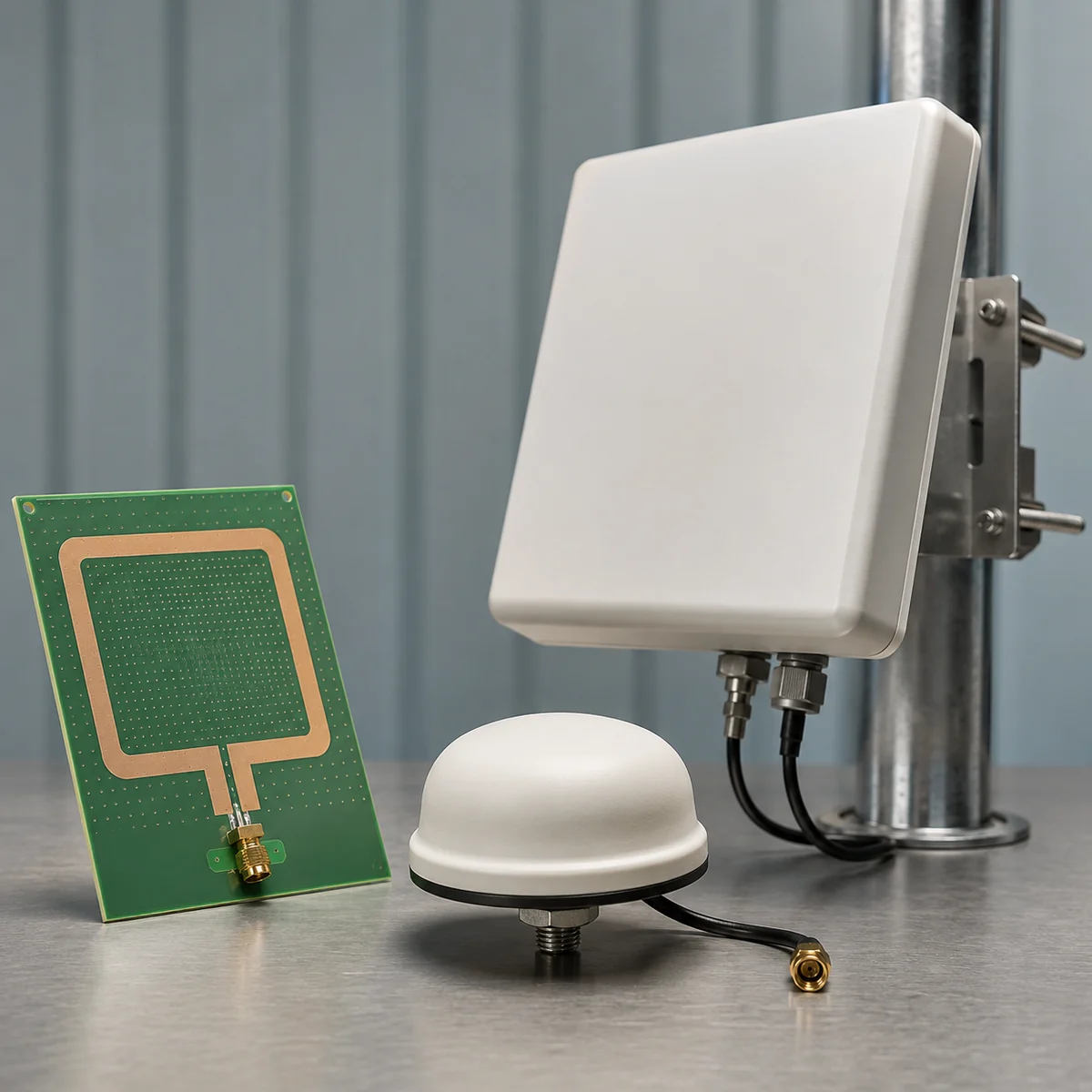
MIMO antennas show up across very different form factors, depending on the deployment:
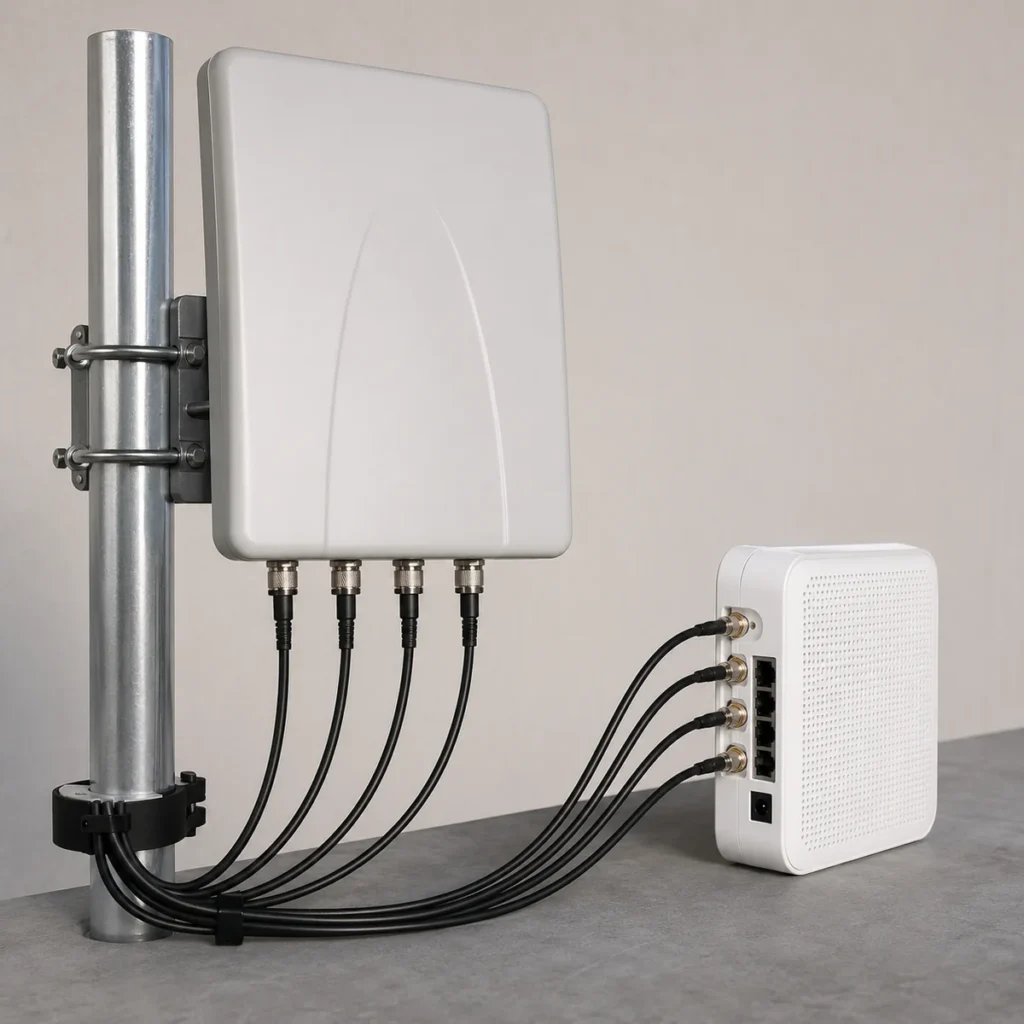
- 5G/LTE routers, gateways, and CPE
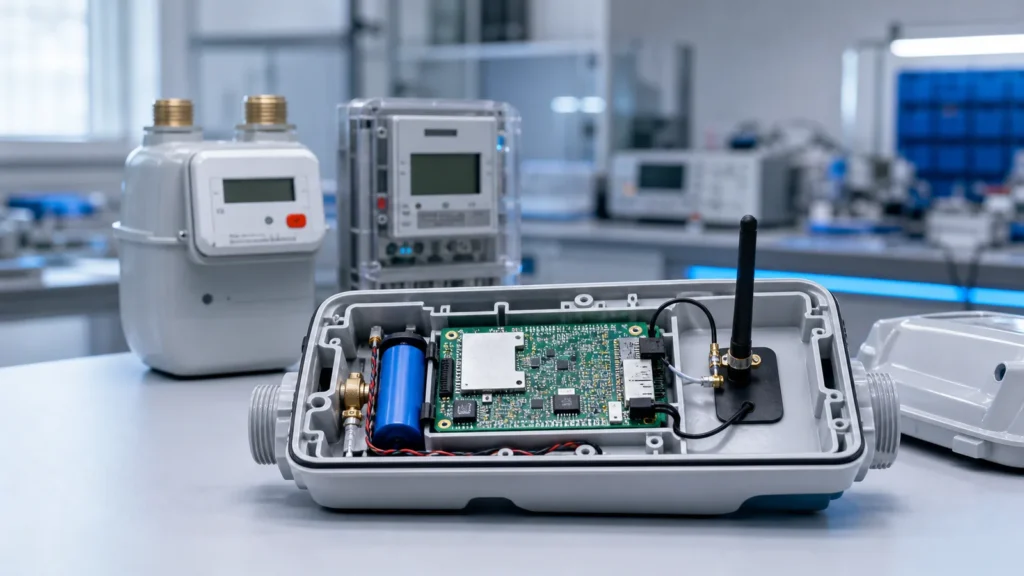
- IoT and industrial devices that need a steady data link
- Indoor coverage and distributed antenna systems (DAS)
- Vehicles and fleets
- Fixed-wireless access links
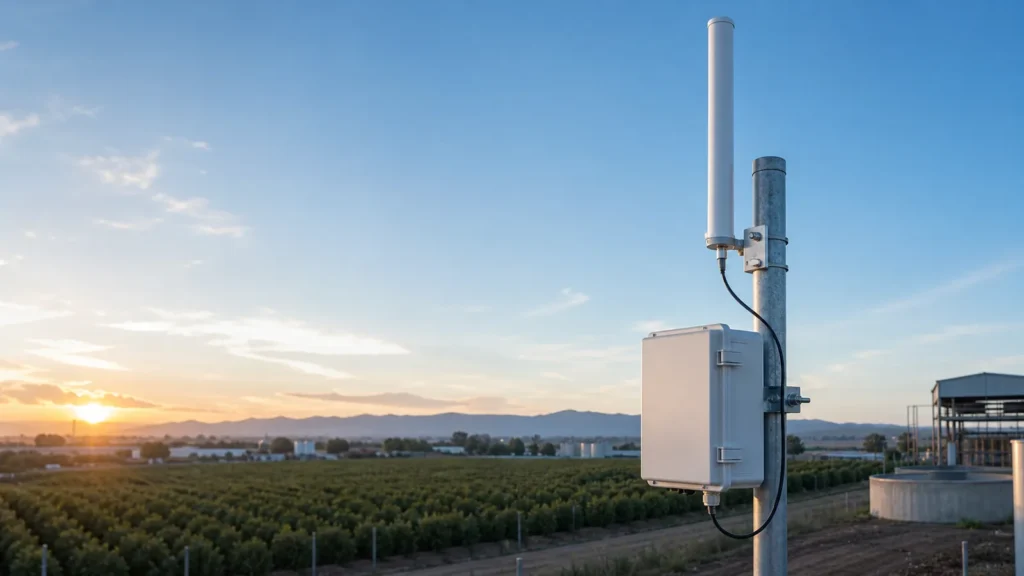
A device-embedded MIMO element and a pole-mounted infrastructure MIMO panel are both “MIMO antennas”; what changes is size, gain, connector, and mounting.
At the network end, base stations use massive MIMO with dozens of elements to serve many users at once. That is infrastructure hardware on the tower side, separate from the antenna on your device or site.
FAQ
What is the purpose of a MIMO antenna?
To increase data throughput and link reliability over the same channel by carrying multiple independent data streams, without needing more spectrum or transmit power.
Is a MIMO antenna effective?
It is effective when the radio has multiple ports and the signal is strong enough to support several streams. In good signal the gain is large; in weak signal it shrinks because the link drops streams.
What is a MIMO antenna system in 5G?
It is the combination of a multi-element antenna and a 5G radio that work together to transmit and receive multiple spatial streams — typically 2×2 or 4×4 on the device or site side, and massive MIMO on the base-station side.
Do I need a MIMO antenna?
If your 5G/LTE radio has two or four antenna ports, yes — a matching MIMO antenna uses capacity a single antenna would waste. If the radio has a single port, a single antenna is the right match.
Conclusion
A 5G MIMO antenna is the practical way to pull more throughput and a steadier link out of the spectrum you already have, as long as the radio and the signal can use the extra streams. Decide by ports and signal first, then choose the form factor for your deployment.
Browse our MIMO antennas and 5G/4G antennas, or send your bands, device, and deployment details to our engineering team for a recommendation. Comparing specific models? See which 5G MIMO antenna to buy. Working out the configuration? See our guide on choosing a 5G/LTE antenna for a router.
Ready to specify a product?
Get product suggestions and quotation details for your application.
Share the building type, coverage area, frequency bands and donor/ceiling antenna requirements. We will help you choose the right components.
Ask our AI antenna assistant. Enter a keyword or question for a free answer based on this article, Global RF Tech content, and general antenna/RF knowledge.
Do not submit confidential or personal information. Privacy Policy