By Rftech RF Engineering Team. Reviewed for antenna selection, RF integration, and cellular connectivity use cases.
The best 5G MIMO antenna for most router and CPE setups is a 4×4 outdoor unit that supports your carrier’s bands (usually 600 MHz to 3.8 GHz, wideband to 6 GHz), gives you 6–9 dBi of usable gain, and runs on low-loss cable kept as short as the install allows. That one sentence settles most of the decision. What’s left is matching the antenna to the site: directional or omnidirectional, panel or dome, and whether you actually need 4×4 or can live with 2×2.
This guide ranks 5G MIMO antennas by the job they do, not by one universal winner. A fixed rural install pulling a distant tower and a van that changes location every hour need different antennas, even on the same network. Below are the picks by scenario, the specs that decide performance, a two-question rule for 4×4 vs 2×2, and the cable mistake that quietly costs people half their signal.
Quick verdict: best 5G MIMO antenna by use case
| Use case | What to get | Why |
|---|---|---|
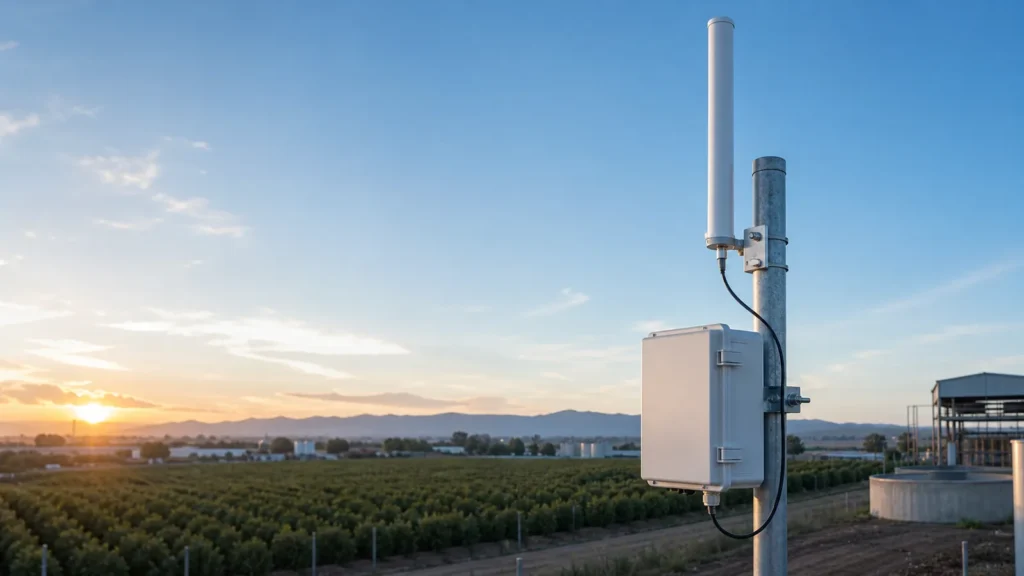
| Rural / weak-signal fixed site | 4×4 directional panel, high gain | Aims at a distant tower, rejects noise from other directions |
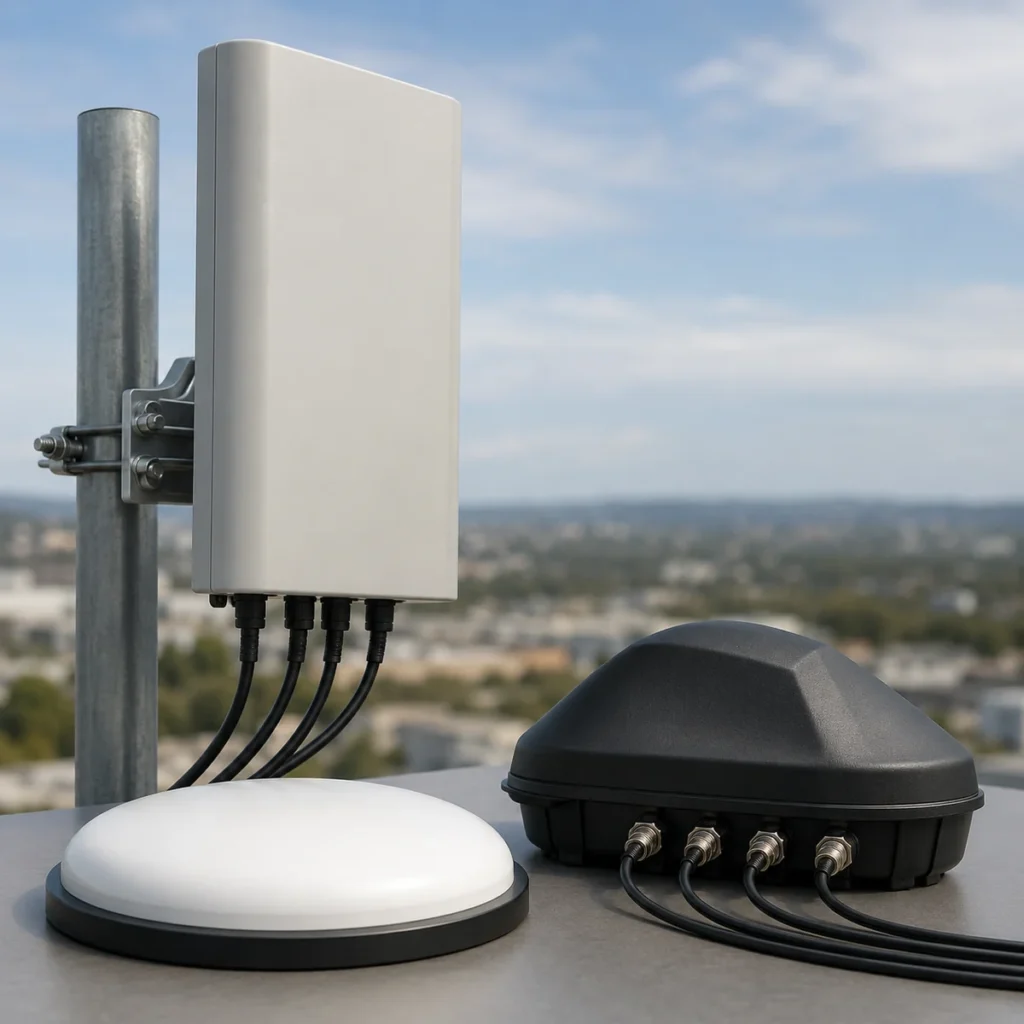
| Home or office 5G router (workable signal) | 4×4 low-profile dome (omni) | No aiming, covers multiple bands and carriers, easy install |
| Vehicle / fleet / RV | Low-profile screw-mount multi-port (often 5-in-1 with GNSS/Wi-Fi) | Survives motion and weather, combines services in one footprint |
| Budget / two-port modem | 2×2 omni | Lower cost when the router only has two antenna ports |
One line to remember: match the bands first, then pick the pattern (directional for reach, omni for convenience), then confirm the port count.
What actually matters in a 5G MIMO antenna
Start with frequency bands. If the antenna does not cover the band your carrier uses, gain and cable quality cannot fix it. Most sub-6 GHz 5G in use today sits between 600 MHz and 3.8 GHz, so antennas rated 600–6000 MHz keep you carrier-agnostic. mmWave (24 GHz and up) is a different hardware class and rarely uses these external antennas.
Then work through the rest:
- Gain (dBi). Higher gain narrows the beam. 6–9 dBi suits most fixed installs. Very high gain only helps when it is aimed precisely at a known tower; on a moving vehicle it can hurt.
- 2×2 vs 4×4 MIMO. This is the port-count and throughput question. See the rule below.
- Polarization and isolation. MIMO needs its streams to stay independent. Good antennas use dual ±45° polarization and keep port-to-port isolation high. Low isolation wastes the second stream.
- Pattern and form factor. Directional panels for reach, omni domes for convenience, low-profile screw mounts for vehicles.
- Environmental rating. Outdoors, look for IP67 sealing, a UV-stable radome, and a temperature range that matches your climate. A radome that chalks and cracks in two summers is a false economy.
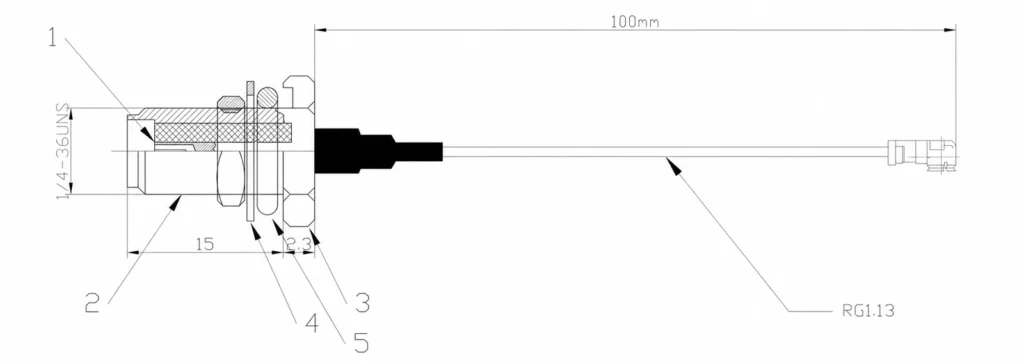
- Connector type. Routers commonly use SMA or TS-9; some outdoor gear uses N-type. Confirm the connector and gender before buying, or plan for an adapter.
- Cable. It gets its own section, because it is where most field losses happen.
4×4 vs 2×2 MIMO: a two-question rule
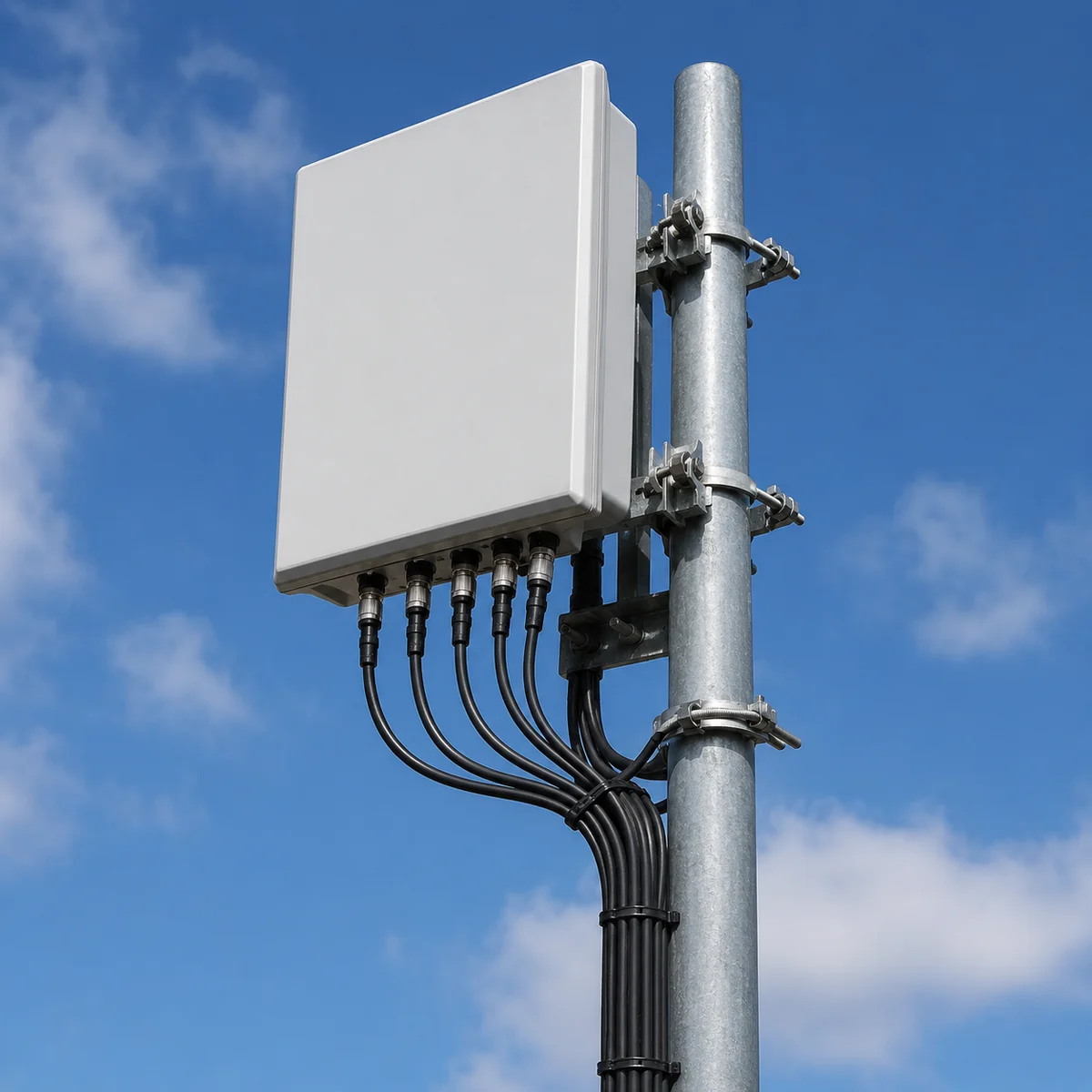
You do not need a spec sheet to settle this. Answer two questions:
- Does your router or modem actually have four antenna ports? If it has two, a 4×4 antenna gives you nothing extra. Buy 2×2 and keep the money.
- Is your signal strong enough to use the extra streams? 4×4 adds throughput when the link can carry four usable spatial streams, which usually needs a good-to-strong signal. In weak signal the link falls back to fewer streams, so the 4×4 advantage shrinks. There, a higher-gain 2×2 or 4×2 directional can beat a low-gain 4×4.
Rule of thumb: four ports plus a decent signal means 4×4. Two ports, or a marginal signal you are fighting to hold, means 2×2 — and spend the budget on gain and a shorter cable.
PRODUCT OPTIONS
Compare options for your installation
Check the operating band, connector and installation space before selecting a model.
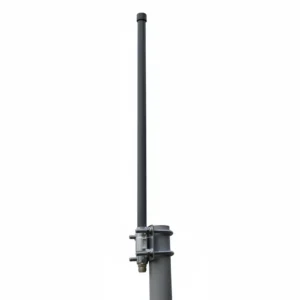
GL-L627FG4D
Dual-connector omnidirectional antenna for cellular installations.
- Bands
- 617–960 / 1710–2700 / 3300–4700 / 5200–6000 MHz
- Connectors
- 2 × SMA male
- Polarization
- Vertical (2 ×)
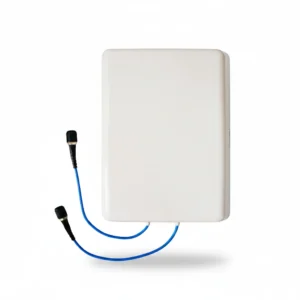
GL-DY7027S
Dual-connector panel antenna for LTE installations.
- Bands
- 698–806 / 806–960 / 1690–2170 / 2170–2700 MHz
- Connectors
- 2 × N female
- Radome
- UV-stabilized ABS
The best 5G MIMO antennas by scenario
Here are five in-stock picks from our cellular modem and router antennas range, mapped to the scenarios above. Match the one whose bands, gain, and connectors fit your router and site — the specs below come straight from each product datasheet.
1. Best wideband omni for 5G routers and CPE — GL-L627FG4D (2×2)
A 2×2 MIMO fiberglass omni tuned across 617–960, 1710–2700, 3300–4700 and 5200–6000 MHz, with 2× SMA male connectors, so it plugs straight into most two-port routers and gateways. Those bands span low-band 5G (n71) through C-band (n77/n78).
2. Best outdoor omni for fixed sites — GL-DY7060VV3 (2×2)
A wideband MIMO omni rated 698–960 / 1710–2700 / 3400–3800 / 4900–6000 MHz at 2.5–5 dBi, with 2× N-K connectors for weatherproof outdoor runs. Pick this when the router lives indoors and the antenna goes on a mast.
3. Best directional panel for reach (LTE / low-band 5G) — GL-DY7027S (2×2)
A 2×2 MIMO panel, 698–2700 MHz at 6.5–9 dBi with 2× N female. The one to aim at a distant tower when your carrier’s 5G rides on sub-2.7 GHz spectrum (DSS / n71 / re-farmed LTE bands). For C-band (n77/n78) directional installs, ask us for the wideband panel option.
4. Best compact screw-mount for vehicles and IoT gateways — GL-DY009
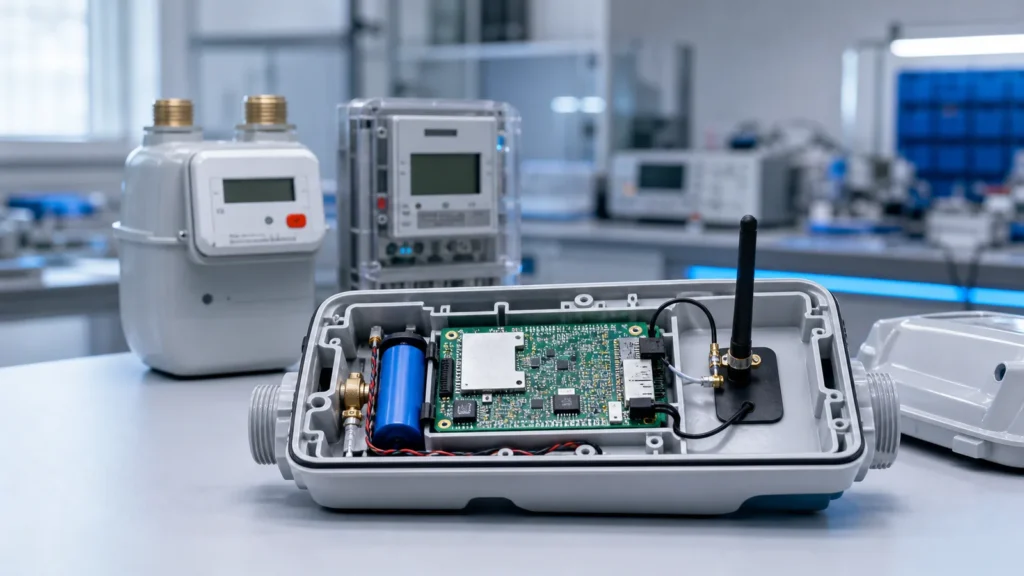
A wideband screw-mount whip, 700–3800 MHz at 3 dBi with SMA male. Use one for single-port modems or a matched pair for 2×2 MIMO on routers in vehicles, cabinets, and industrial gateways.
5. Best budget option for two-port modems — GL-DY403-4G
A 700–2700 MHz rubber duck at 2.5 dBi, SMA male. Right when cost decides and the modem only has two ports.
Need true 4×4? Four-port routers can run two matched 2×2 pairs, or step up to our infrastructure-grade 4×4 MIMO antennas for fixed-wireless and small-cell builds. For an exact-fit build (band split, connector, cable length, mounting), our OEM team builds to spec — that’s the option retail antenna brands can’t offer.
Spec comparison at a glance
| Model | Bands (MHz) | Gain | MIMO | Pattern | Connector | Best for |
|---|---|---|---|---|---|---|
| GL-L627FG4D | 617–960 / 1710–2700 / 3300–4700 / 5200–6000 | — | 2×2 | Omni (fiberglass) | 2× SMA male | Wideband omni for routers / CPE |
| GL-DY7060VV3 | 698–960 / 1710–2700 / 3400–3800 / 4900–6000 | 2.5–5 dBi | 2×2 | Omni | 2× N-K | Outdoor fixed sites |
| GL-DY7027S | 698–2700 | 6.5–9 dBi | 2×2 | Directional panel | 2× N female | Directional reach (LTE / low-band 5G) |
| GL-DY009 | 700–3800 | 3 dBi | 1× (pair for 2×2) | Omni whip (screw mount) | SMA male | Vehicles / IoT gateways |
| GL-DY403-4G | 700–2700 | 2.5 dBi | 1× (pair for 2×2) | Omni (rubber duck) | SMA male | Budget two-port modems |
Specs above are from each model’s datasheet. Gain is listed per band where the datasheet breaks it out; confirm the exact band and connector for your router before ordering.
Cable and connectors: the quiet performance killer
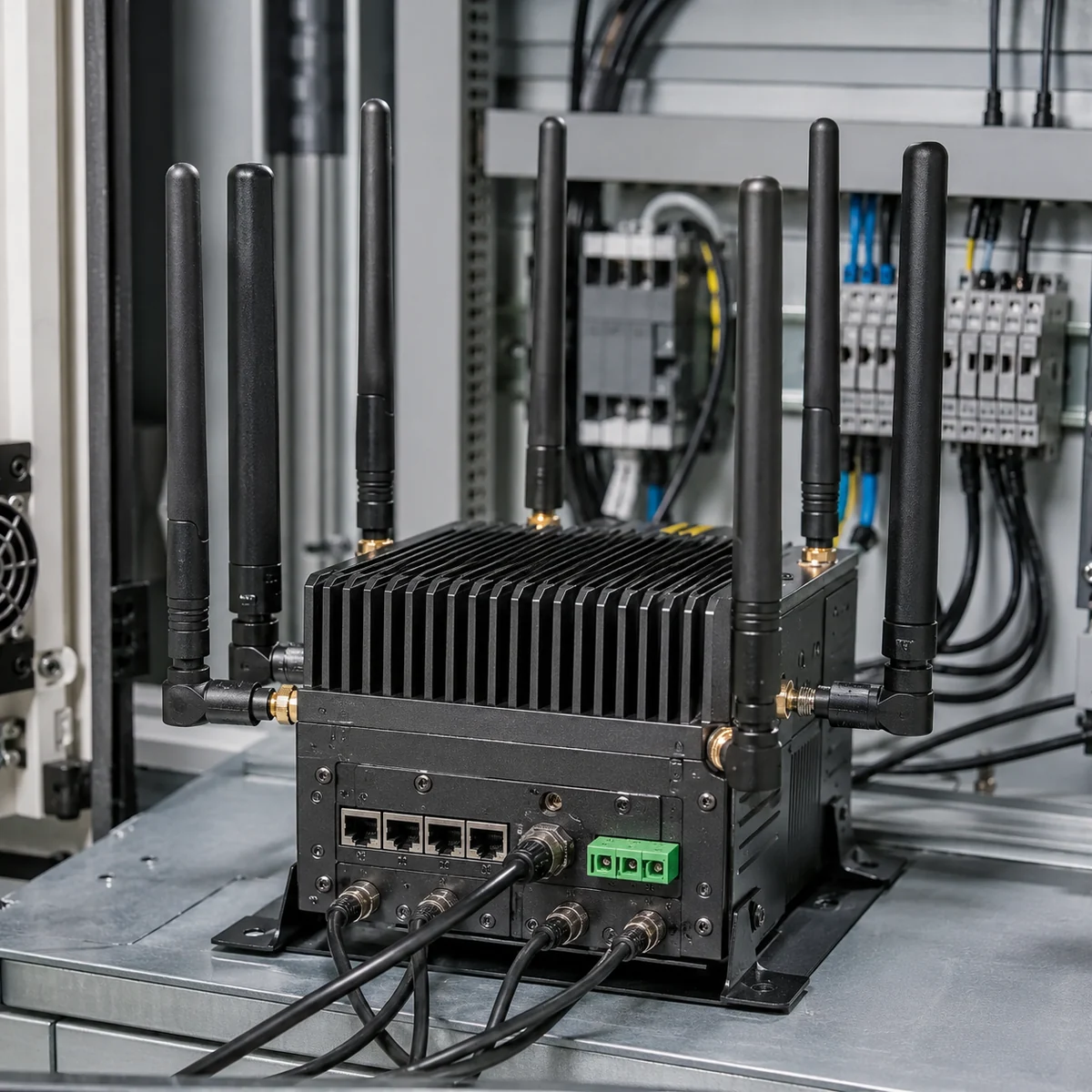
A good antenna on bad cable underperforms a modest antenna on good cable. At 5G frequencies, loss climbs fast with both length and cable grade.
- Keep cable runs as short as the install allows.
- For runs up to about 15 m, 195/240-type cable is usually fine.
- Beyond 15 m, move to 400-type to hold the loss budget.
- Avoid RG58 for 5G. Its loss at these frequencies is too high to justify.
- Confirm the connector (SMA, TS-9, N-type) and gender at both ends before ordering.
If a long run is unavoidable, remember that part of the antenna’s gain is there to pay back cable loss. Budget the two together, not separately.

Installation and mounting
- Mount as high and clear of obstructions as practical. Line of sight to the tower matters more than raw gain.
- For directional panels, aim carefully; a few degrees off can cost several dB. Use the router’s signal readings (RSRP/SINR) instead of guessing.
- For omni units, height and clearance do the work. There is nothing to aim.
- Keep the antenna away from large metal surfaces that distort the pattern.
- Weatherproof every outdoor connector. Water in a connector is a slow failure that looks like a dying antenna.
FAQ
What is the best antenna for 5G?
For most router and CPE setups, a 4×4 wideband (600–6000 MHz) MIMO antenna with 6–9 dBi gain, matched to your carrier’s bands and connectors. Use a directional panel for reach and an omni dome for convenience.
Do MIMO antennas actually work?
Yes, when the link can use multiple spatial streams. MIMO raises throughput and stability by sending data over several paths at once. The benefit is largest in good signal; in weak signal it shrinks as the link drops streams.
Is a MIMO antenna better than a single antenna?
For 5G and LTE routers, yes. Modern modems are built for MIMO, and a single antenna leaves capacity unused. The exception is a two-port modem, where a 2×2 antenna is the right match and a 4×4 adds nothing.
2×2 or 4×4 for a home 5G router?
If the router has four antenna ports and your signal is reasonable, 4×4. If it has two ports, or you are fighting to hold a weak signal, 2×2 with higher gain and a shorter cable is the better spend.
Is an external MIMO antenna better than my router’s internal antenna?
Usually yes at the edge of coverage. An external antenna mounted high with a short, low-loss cable outperforms the internal antennas buried in the router body.
Do I need 4×4 MIMO for 5G to work?
No. 5G works on 2×2; 4×4 adds throughput when the signal is strong and the router has four ports.
One line to remember: match the bands first, then use the coverage pattern to choose omni or directional. For the pattern decision itself, see the guide on how to choose omni or directional by coverage pattern.
Conclusion
Pick the antenna by your site, not by a spec-sheet headline. Match the bands, choose directional for reach or omni for convenience, confirm the port count and connectors, and keep the cable short and low-loss. Get those right and a mid-range antenna will beat an expensive one installed badly.
Need the setup basics too? Read how to choose a 5G/LTE antenna for a home router. Browse our MIMO antenna category for related industrial antenna formats. New to MIMO? Start with What Is a 5G MIMO Antenna?, then browse our 5G/4G antenna range.
Get an exact-fit recommendation: send us (1) your carrier bands or country, (2) router/CPE model and antenna port count, (3) cable length you need, (4) mounting surface, and (5) quantity — our engineers will return a model or custom build with an RFQ within one business day.
Need help choosing a model?
Tell us your operating band, connector and installation constraints. Our team can review the options with you.
Discuss selection & pricingAsk our AI antenna assistant. Enter a keyword or question for a free answer based on this article, Global RF Tech content, and general antenna/RF knowledge.
Do not submit confidential or personal information. Privacy Policy