
Land Mobile & Two-Way Radio
VHF & UHF Antennas
77 published VHF and UHF antenna models for land mobile radio, trunked networks, telemetry and industrial wireless links. VHF coverage runs 110–290 MHz across 47 models; UHF coverage runs 300–450 MHz across 30 models. Every model is 50 Ω and vertically polarised.
Browse by Band
Start from your operating frequency. The bulk of the VHF range sits in the 134–174 MHz land mobile segment, with a separate group covering 220–290 MHz. UHF is concentrated in 300–400 MHz, with 430–450 MHz covered by a dedicated spring FRP model.
VHF · 110–290 MHz
47 published models. Gain 2.0–14.5 dBi, power handling 50–500 W. Available as fiberglass omni, Yagi, vehicle-mount and folded dipole array.
UHF · 300–450 MHz
30 published models. Gain 3.0–15.7 dBi, power handling 50–500 W. Available as fiberglass omni, Yagi, folded dipole array, panel and portable terminal.
Narrowband segments
Models tuned to tight segments where a wideband antenna would waste margin — 351–366 MHz, 223–235 MHz and 433.175–434.665 MHz.
Representative Published Models
One example per form factor. Each links to the published product page with the full specification table.
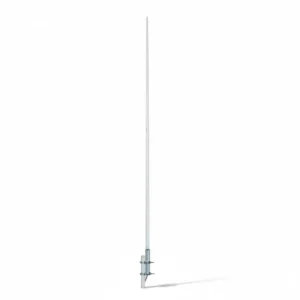
GL-DY150MB
VHF fiberglass omni · 134–173 MHz · 8.7 dBi · 150 W. The highest-gain VHF omni in the range.
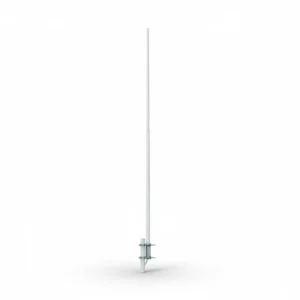
GL-DY350UQ10-M
UHF fiberglass omni · 350–400 MHz · 14.2 dBi · 300 W · 7/16 DIN Female. The highest-gain omni in the catalogue.
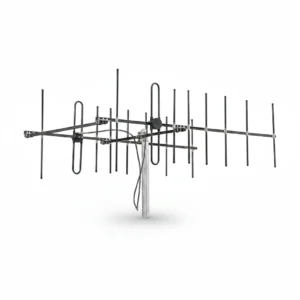
GL-DYJ150E
VHF Yagi · 134–173 MHz · 14.5 dBi · 100 W. Where a VHF omni runs out of gain.
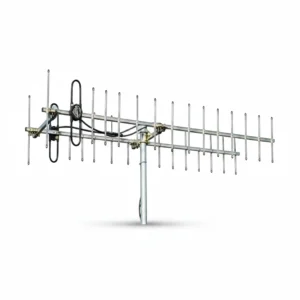
GL-DYJ350F
UHF Yagi · 330–390 MHz · 15.7 dBi · 100 W. Highest gain of any model listed here.
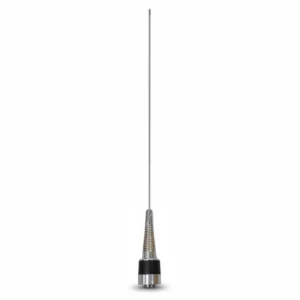
GL-DY150DW
VHF vehicle-mount · 136–174 MHz · 2.0 dBi · 50 W · NMO Male base.
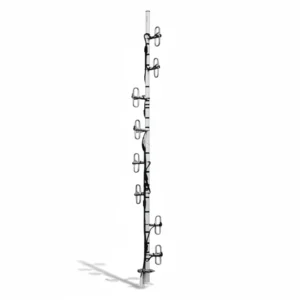
GL-DY150IIA
VHF folded dipole array · 134–173 MHz · omni 12 dBi / directional 15 dBi · 500 W.
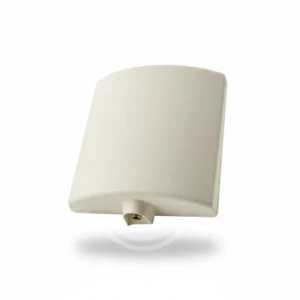
GL-DYJ350BKB
UHF panel · 330–390 MHz · 5 dBi · 50 W · N Female. Sector coverage in a defined area.

GL350AC
UHF portable terminal · 358–381 MHz · 5 dBi · 50 W · N Male or BNC Male. Specified for backpack equipment.
Compare Coverage by Band and Form Factor
Figures below are the published ranges across all 77 models. Confirm the exact specification sheet for the selected model before sampling or integration.
| Form factor | Band | Models | Frequency | Gain | Max input power |
|---|---|---|---|---|---|
| Fiberglass omni | VHF | 12 | 110–174 MHz | 3.0–8.7 dBi | 50–500 W |
| Fiberglass omni | UHF | 18 | 300–400 MHz | 3.0–14.2 dBi | 100–500 W |
| Yagi directional | VHF | 9 | 134–290 MHz | 8.0–14.5 dBi | 50–100 W |
| Yagi directional | UHF | 5 | 300–435 MHz | 11.2–15.7 dBi | 100 W |
| Vehicle-mount | VHF | 16 | 134–174 MHz | 2.0–4.7 dBi | 50–100 W |
| Folded dipole array | VHF | 9 | 134–175 MHz | up to omni 12 / directional 15 dBi | 100–500 W |
| Folded dipole array | UHF | 2 | 330–400 MHz | up to omni 12 / directional 15 dBi | 500 W |
| Panel | UHF | 3 | 330–390 MHz | 5 dBi | 50 W |
| Portable terminal | UHF | 1 | 358–381 MHz | 5 dBi | 50 W |
All models are 50 Ω nominal impedance and vertically polarised. Published VSWR is ≤1.5 or ≤2.0 depending on the model.
How to Select a VHF or UHF Antenna
Lock the operating frequency
VHF 110–290 MHz or UHF 300–450 MHz. Narrowband models exist where you do not need the full segment, and a narrower band usually buys better VSWR across the frequencies you actually use.
Set the gain against the coverage shape
Omnidirectional gain is bought by flattening the vertical pattern, so a high-gain omni on a hilltop can shoot over users below. If an omni cannot reach the gain you need, move to a Yagi or a folded dipole array rather than a longer omni.
Check the ground plane
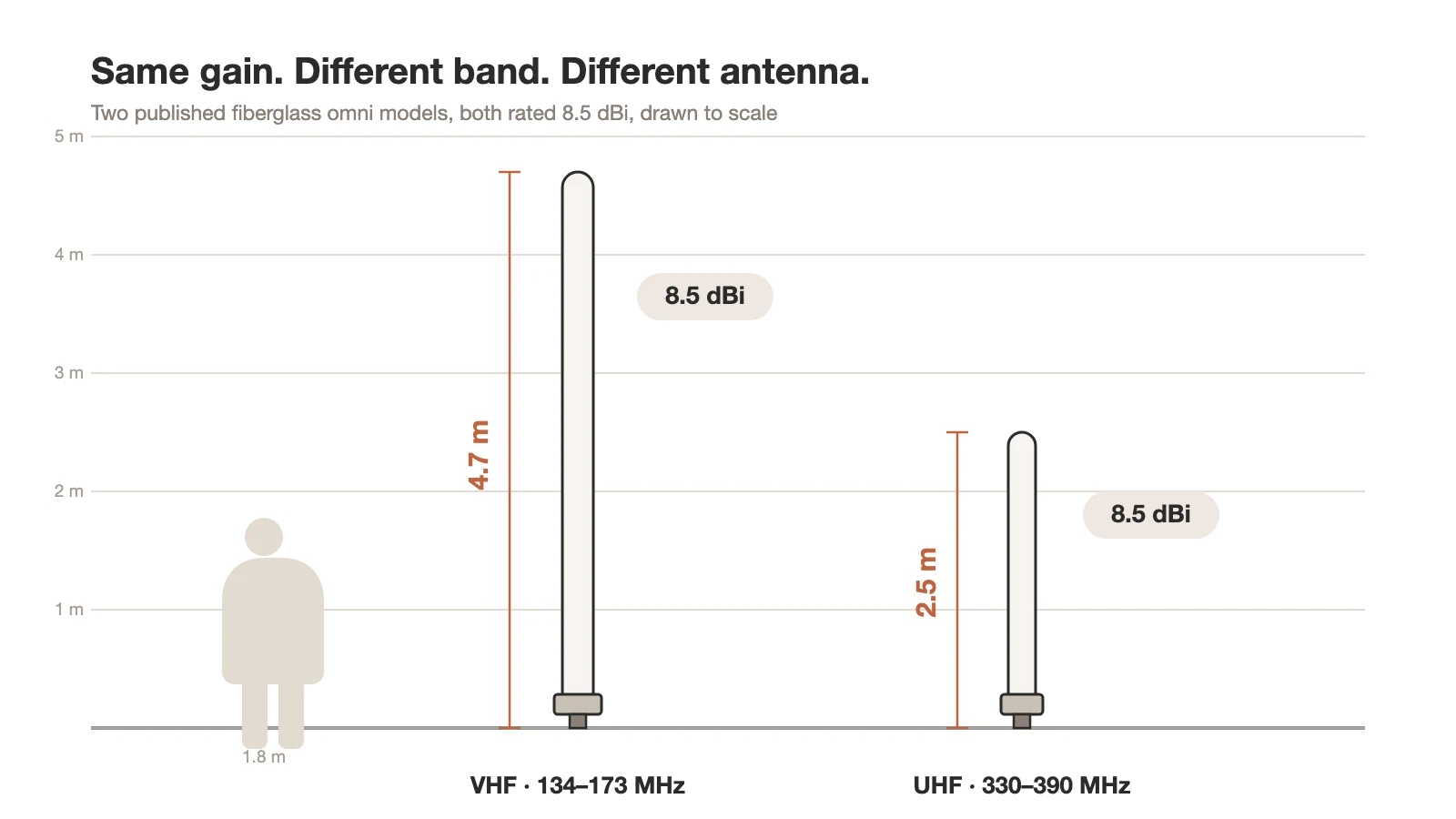
Vehicle-mount VHF antennas use the vehicle body as their ground plane, and at VHF wavelengths that surface needs to be large — a roof panel, not a bracket. This is why vehicle-mount models sit at 2.0–4.7 dBi while base station omnis in the same band reach 8.7 dBi.
Match the connector
N Female is the most common fitting on base station hardware. Vehicle models use UHF Male (PL-259) or NMO Male. The 300–500 W hardware moves to 7/16 DIN Female. Compact and portable equipment uses SMA Male or BNC Male.
Confirm power handling
Published ratings run 50 W to 500 W. Rate against the transmitter output at the antenna port, not the nominal system power.
Check the mechanical fit before the electrical one
A high-gain VHF antenna is a physically large object — the 3.2 dBi fiberglass omni alone is 1.4 m. Confirm mast loading, wind loading and installation access before specifying gain.
Which Connector Do You Need?
Interface is often the constraint that eliminates most of the catalogue, so it is worth settling early.
- N Female — the most common fitting across base station hardware in both bands: fiberglass omni, Yagi and panel models.
- UHF female / SL16 — widely used on VHF and UHF fiberglass omni models; SL16 is the same mechanical family as SO-239.
- UHF Male (PL-259) — standard on vehicle-mount VHF models.
- NMO Male — the alternative vehicle base, used where a through-roof NMO mount is already installed.
- 7/16 DIN Female — the interface supplied on the 300–500 W folded dipole arrays and high-power fiberglass omnis.
- SMA Male / BNC Male — compact and portable equipment, including the 223–235 MHz Yagi and the portable terminal antenna.
Ten models are published with a customisable interface, and connector type can be specified on order for others. Frequencies outside 110–290 MHz and 300–450 MHz — including 450–470 MHz — are not covered by published models and need to be assessed against your requirement before feasibility can be confirmed.
Send the Details Needed for Selection
To get a usable response on the first reply, include your operating frequency or range, required gain, transmit power, interface type and gender, mounting method and available space, and the environmental conditions the antenna will see.
Related: omnidirectional antennas · whip antennasUHF vs VHF antennas · outdoor TV antenna guide
