
Parabolic Dish Antennas
Parabolic Dish Antennas for Long-Range Point-to-Point Links
A parabolic dish concentrates RF energy into a narrow beam, which is what makes it the practical choice once a link outruns what an omni or a panel can hold. Our published range covers 2.2–2.5 GHz and 5.15–5.85 GHz in single and dual polarization, from 17 dBi wide-beam units up to 28 dBi dishes with a 6° beamwidth.
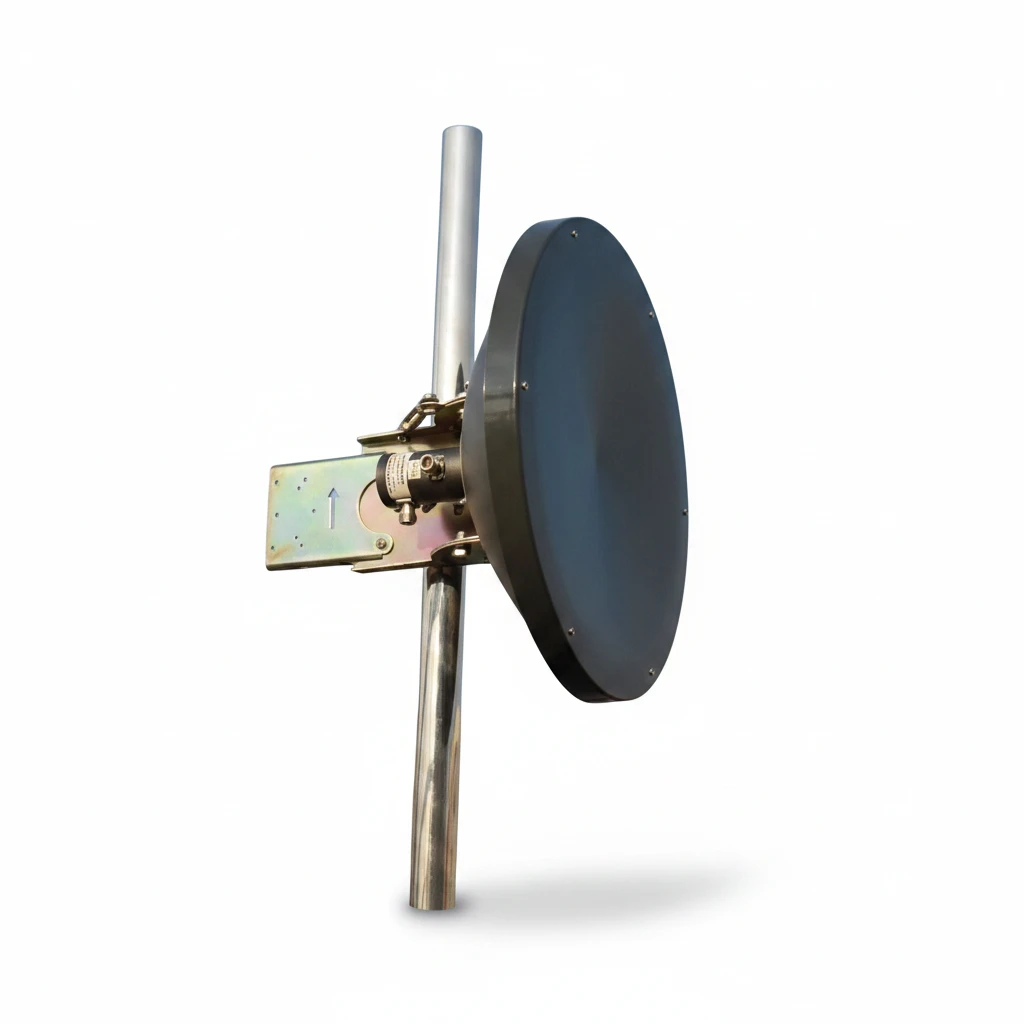
Browse Parabolic Antennas by Band
Band comes first in almost every parabolic selection, because dish diameter, beamwidth and achievable gain are all tied to wavelength. The same physical reflector delivers roughly 7 dB more gain at 5 GHz than it does at 2.4 GHz — which is why our 5 GHz models reach 28 dBi in a 0.6 m dish while the 24 dBi 2.4 GHz unit needs a 0.9 × 0.6 m aperture.
WLAN, Wi-Fi and ISM point-to-point or point-to-multipoint links. Two published models: a 17 dBi unit with a forgiving 16° beam for shorter hops, and a 24 dBi square-grid dish with a 7° beam and ≥25 dB front-to-back ratio.
The widest part of our range. Four published models from 23 dBi to 28 dBi, including dual-polarized versions for MIMO radios and a 28 dBi dish holding ≥35 dB front-to-back for interference-heavy sites.
Band-limited units for ISM 5.8 GHz deployments where out-of-band rejection matters more than tuning range. Two published 24 dBi models, one round 0.4 m dish and one 0.4 × 0.3 m grid.
Representative Published Models
Every model below has a live product page with its full RF and mechanical data. All of them run 50 Ω input impedance, VSWR ≤1.5, DC-ground lightning protection and an aluminium reflector rated −40 °C to +65 °C.
5150–5850 MHz · 28 dBi · 6° × 6° beam · ≥35 dB F/B · ø0.6 m · 100 W. Our highest published gain in a round dish.
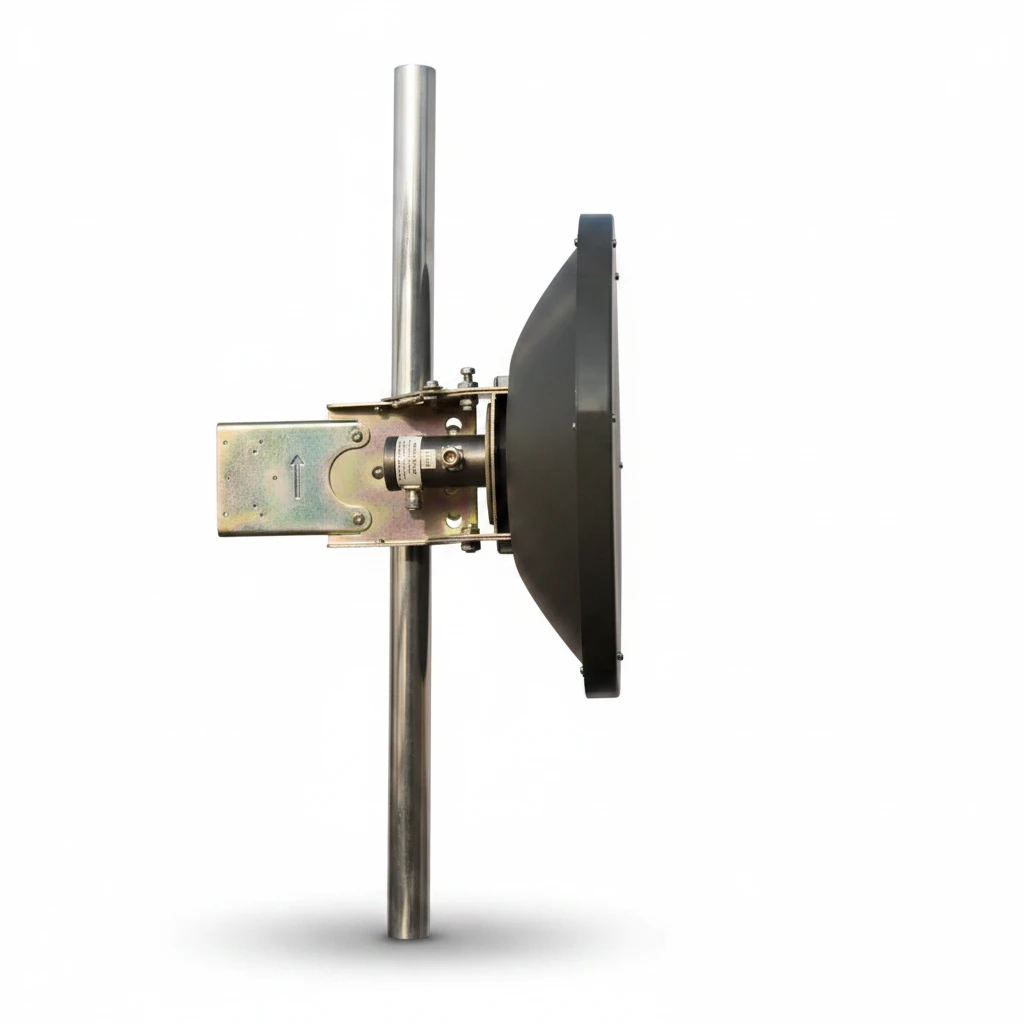
5150–5850 MHz · 27 dBi · 6° × 9° beam · ≥25 dB F/B · 0.6 × 0.4 m · 100 W · 2.4 kg.
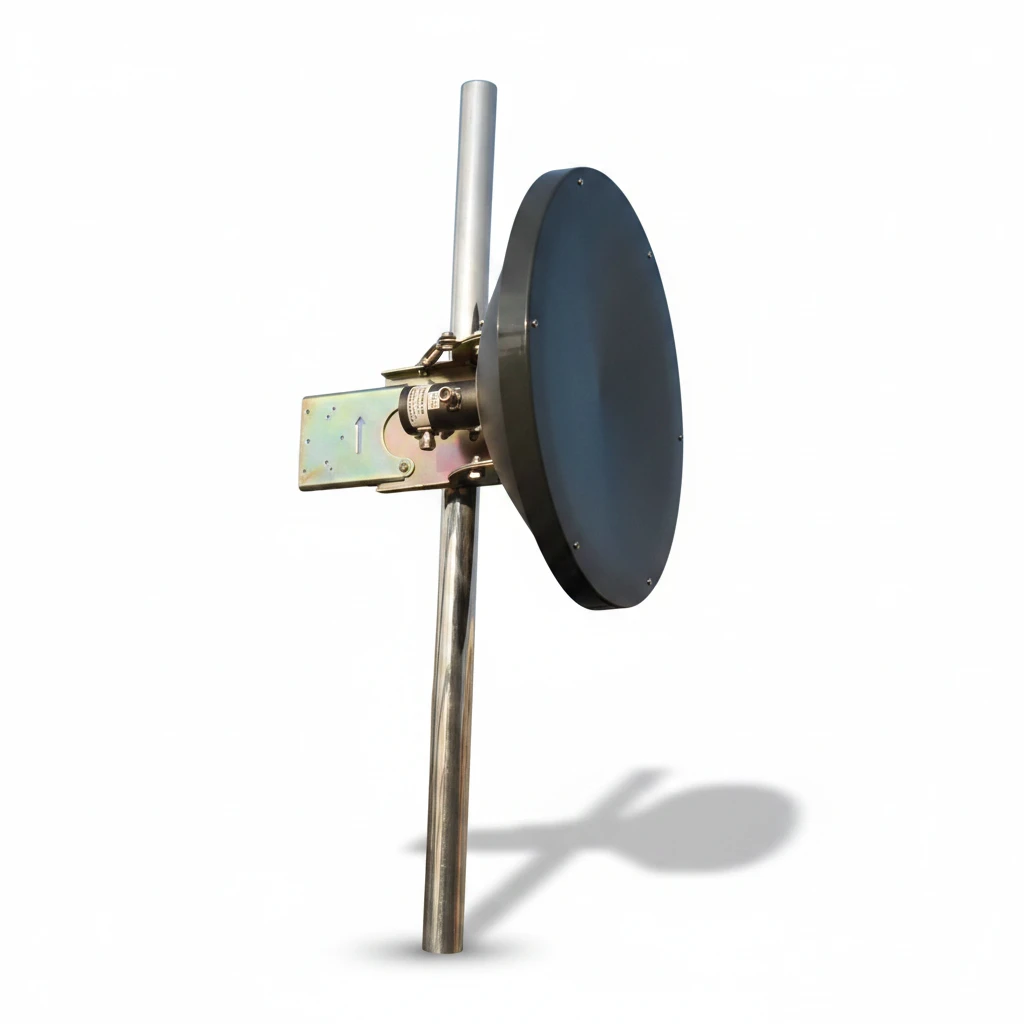
5150–5850 MHz · 23 dBi · 9° × 9° beam · ≥35 dB F/B · dual polarization, 2 × N-K · 100 W. For 2×2 MIMO radios.
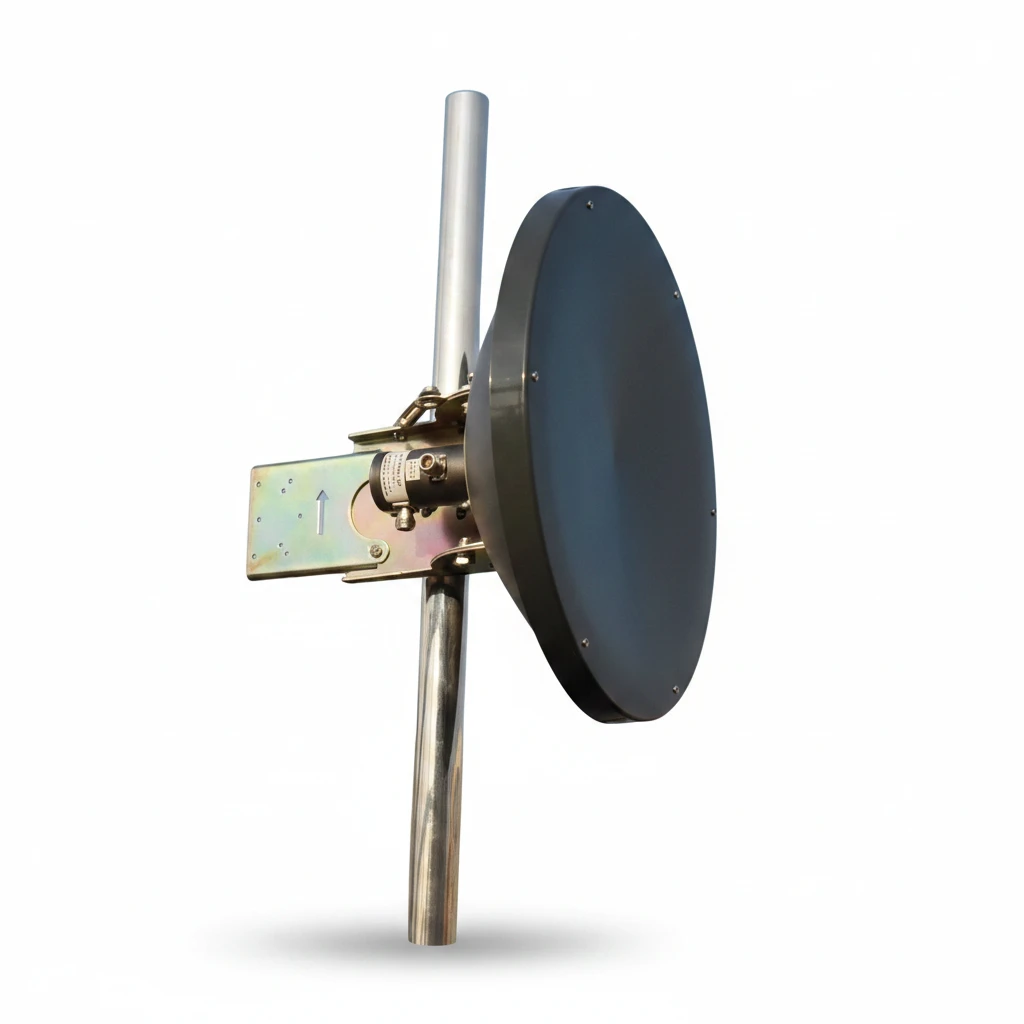
2200–2500 MHz · 24 dBi · 7° × 11° beam · ≥25 dB F/B · 0.9 × 0.6 m square-grid dish · 50 W · 2.5 kg.
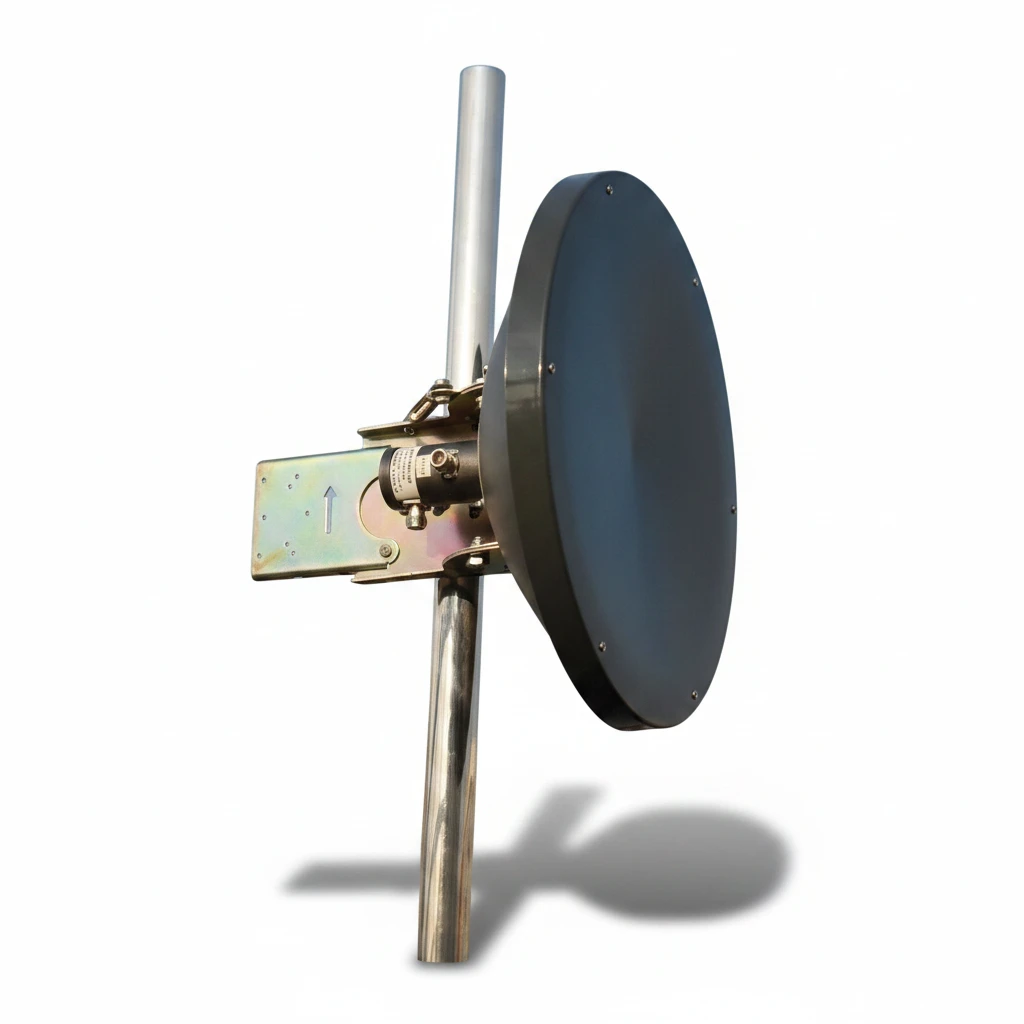
5725–5850 MHz · 24 dBi · 9° × 9° beam · ≥30 dB F/B · ø0.4 m · 100 W. Compact 5.8 GHz ISM dish.
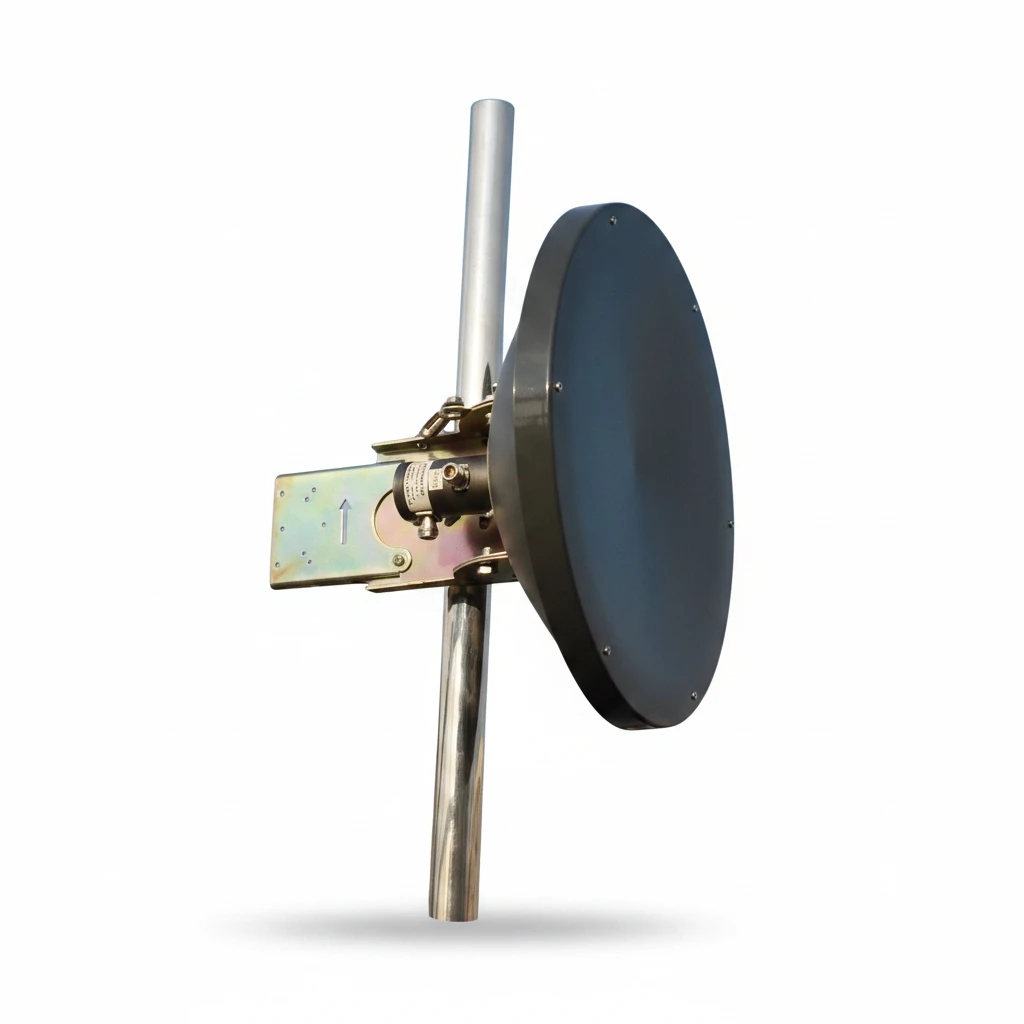
2400–2500 MHz · 17 dBi · 16° × 21° beam · ≥20 dB F/B · 0.4 × 0.3 m · 100 W. Wider beam tolerates more mast movement.
Compare All Published Parabolic Dish Models
Read gain and beamwidth together. A higher-gain dish is always a narrower dish, and past roughly 25 dBi the alignment tolerance starts to drive the install more than the link budget does.
| Model | Frequency (MHz) | Gain (dBi) | H / V beamwidth | Front-to-back | Polarization | Connector | Dimensions (m) | Max power (W) | Wind rating (m/s) |
|---|---|---|---|---|---|---|---|---|---|
| GL-DY2225V24 | 2200–2500 | 24 | 7° / 11° | ≥25 dB | Vertical | N female | 0.9 × 0.6 | 50 | 60 |
| GL-DY2425V17 | 2400–2500 | 17 | 16° / 21° | ≥20 dB | Vertical | N-K | 0.4 × 0.3 | 100 | 60 |
| GL-DY5158V28 | 5150–5850 | 28 | 6° / 6° | ≥35 dB | Vertical | N-K | ø0.6 | 100 | 60 |
| GL-DY5158VH23 | 5150–5850 | 23 | 9° / 9° | ≥35 dB | Dual (V+H) | 2 × N-K | — | 100 | 60 |
| GL-DY5158VH32 | 5150–5850 | 32 | 3.5° / 3.5° | ≥40 dB | Dual (V+H) | 2 × N-K | ø0.9 | 100 | 60 |
| GL-DY5800V24A | 5725–5850 | 24 | 9° / 9° | ≥30 dB | Vertical | N-K | ø0.4 | 100 | — |
| GL-DY5800V24B | 5725–5850 | 24 | 9° / 12° | ≥20 dB | Vertical | N-K | 0.4 × 0.3 | 100 | — |
| GL-DY5800V27 | 5150–5850 | 27 | 6° / 9° | ≥25 dB | Vertical | N-K | 0.6 × 0.4 | 100 | 60 |
A dash means we have not published that figure for the model yet. Ask us and we will confirm it against the test report rather than let you infer it from a neighbouring model — dish dimensions and wind ratings do not carry across a family.
How to Select a Parabolic Dish Antenna
Lock the band before anything else
Dish gain scales with aperture measured in wavelengths, so the same reflector behaves differently at 2.4 and 5 GHz. Start from the radio’s operating band, then check the antenna covers it end to end — a 5725–5850 MHz unit will not serve a 5.2 GHz channel plan.
Read gain and beamwidth as one number
Gain is bought with beamwidth. Our 17 dBi model gives you a 16° beam that tolerates mast sway; the 28 dBi model narrows that to 6°, and the 3.5° dual-pol dish demands a rigid mount and a proper alignment pass. Pick the lowest gain that closes the link.
Decide single or dual polarization
A 2×2 MIMO radio needs two ports with orthogonal polarization to deliver two spatial streams. Our dual-polarized dishes present 2 × N-K for exactly that. A single-port dish on a MIMO radio wastes one chain.
Use front-to-back ratio against interference
On a congested rooftop, rear and side rejection matters as much as forward gain. Published figures here run from ≥20 dB to ≥40 dB. If a competing link sits behind your dish, specify the higher rejection even when the link budget does not demand the gain.
Plan the mount, tilt and wind load
These dishes offer 0–20° mechanical tilt and, where published, a 60 m/s wind rating. Aperture is also sail area: the 0.9 × 0.6 m grid loads a mast far harder than the 0.4 m dish. Confirm pole diameter and bracket before you finalise the structure.
Close the RF path properly
Check connector gender and orientation against the radio and jumper, keep the feeder run short at 5 GHz where loss climbs quickly, and confirm the DC-ground lightning path is bonded to the structure. Power handling is 50–100 W depending on model.
When a Parabolic Dish Is the Right Answer
A dish is a specialist. It trades coverage for reach, and it only pays off when both ends of the link are fixed and known.
- Use a dish for fixed point-to-point backhaul, building-to-building links, and any hop long enough that a panel runs out of margin.
- Use a dish when you need to reject an interferer sitting off-axis, which its narrow beam and high front-to-back ratio do naturally.
- Use an omnidirectional antenna when clients arrive from every bearing, or when the far end moves. A dish pointed at nothing is worse than a 6 dBi omni.
- Use a Yagi when you want directivity without the sail area or the alignment discipline a dish demands.
- Check MIMO options if the radio has two or more chains — polarization diversity often beats raw gain.
- New to dishes? Our guide on how a parabolic antenna works covers the gain formula, beamwidth and the real trade-offs.
- Not sure which side of that line you are on? Our omnidirectional vs directional comparison walks through the trade-off.
Send the Details Needed for Selection
Give us the operating band, link distance, radio model and port count, mounting structure and site conditions. We will come back with the matching dish, the connector and jumper detail, and a sample or production quote. If a figure is missing from the table above, we will confirm it from the test report before you order.
