
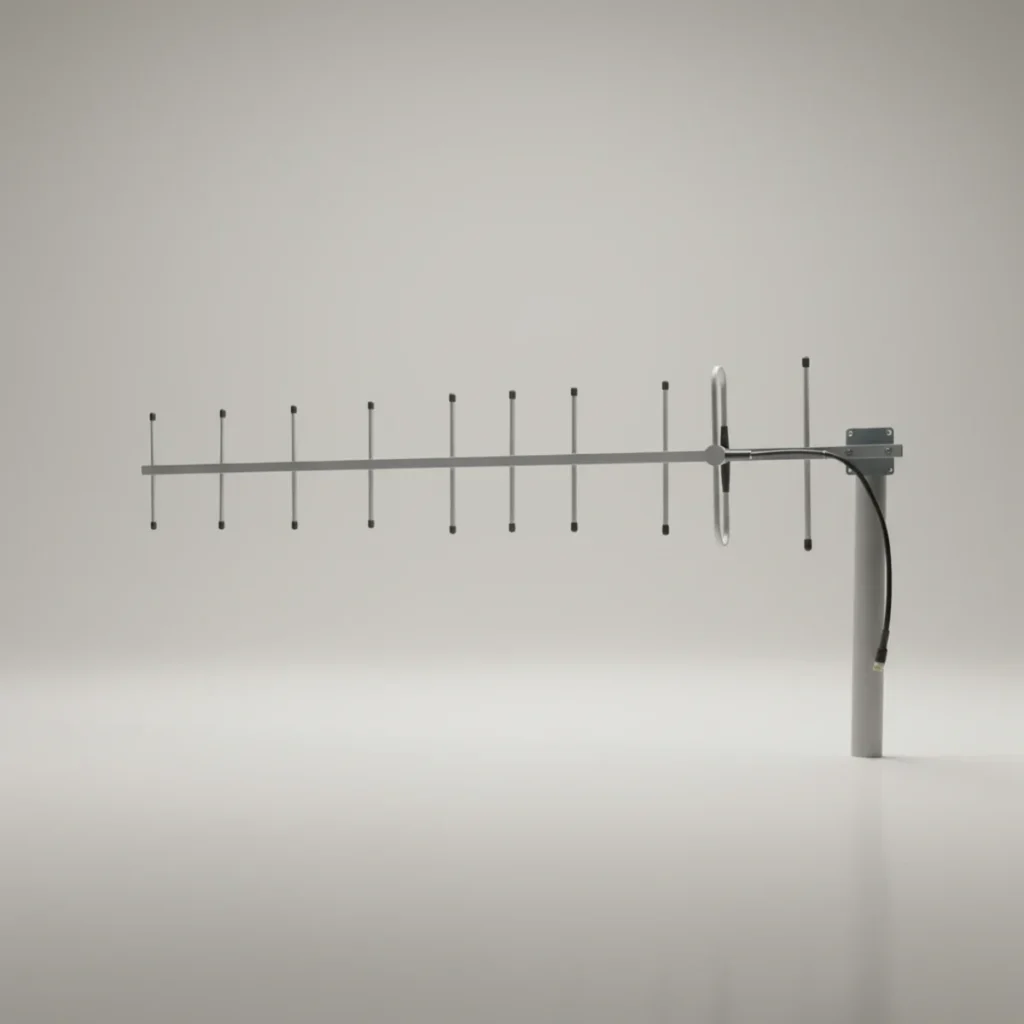
Yagi antenna manufacturer and supplier
Yagi Antennas for Directional RF Communication
Global RF Tech supplies Yagi antennas for directional RF links where the antenna needs to focus signal energy toward a known target instead of covering every direction. Compare available models by frequency range, gain, connector type and installation requirement.
If your project has a fixed radio band, connector, mast size, enclosure limit or cable route, send those requirements before sampling. A Yagi antenna is sensitive to frequency, polarization and alignment, so the best choice depends on the system rather than the antenna name alone.
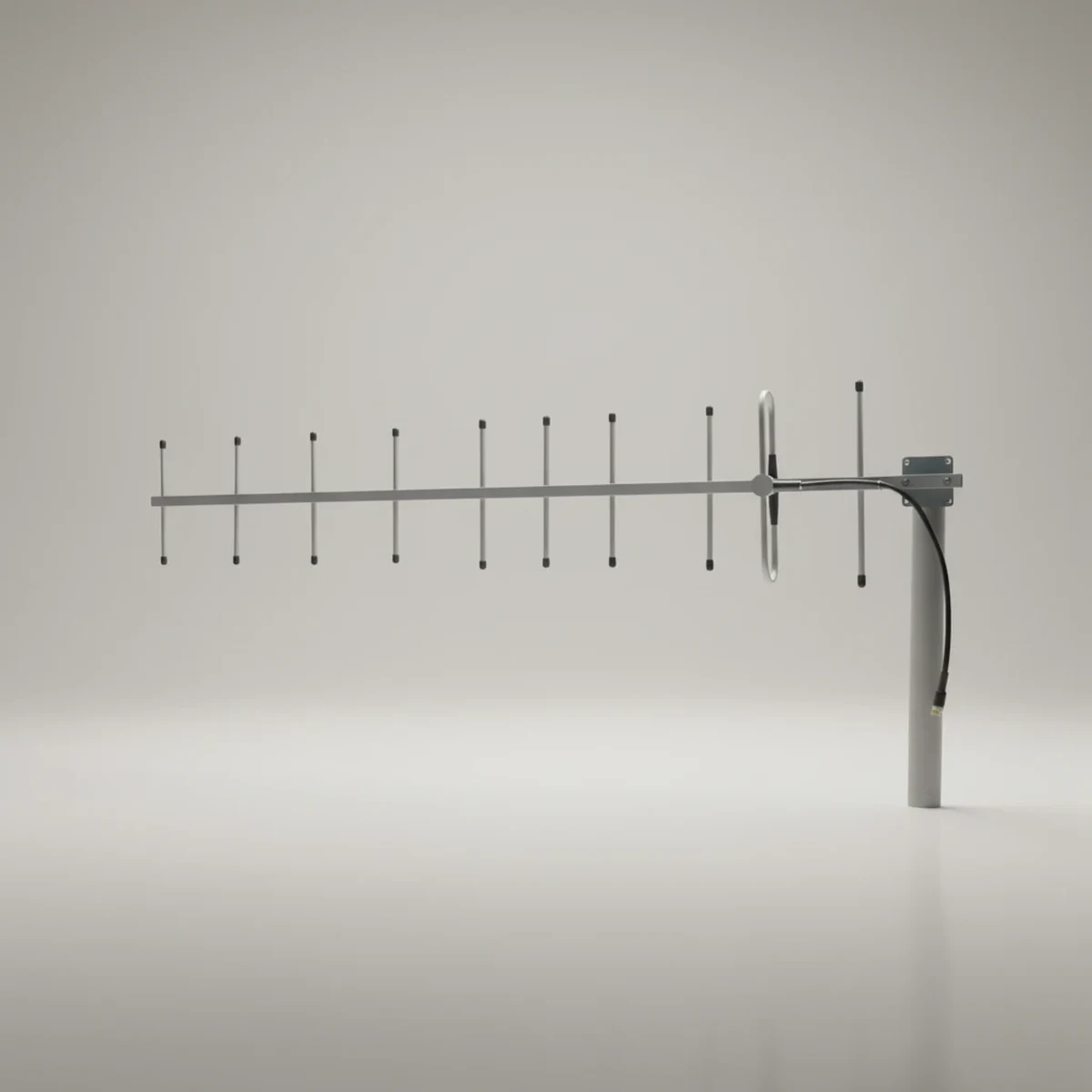
Yagi Antenna Model Selection
Start with the operating band. Gain, connector and mounting style matter, but they cannot compensate for a frequency mismatch. The models below are taken from current Global RF Tech product pages and should be checked against the final radio, cable, installation height and project environment before quotation.
Use for fixed 300-470 MHz directional links, industrial RF systems and pole-mounted coverage where alignment is practical.
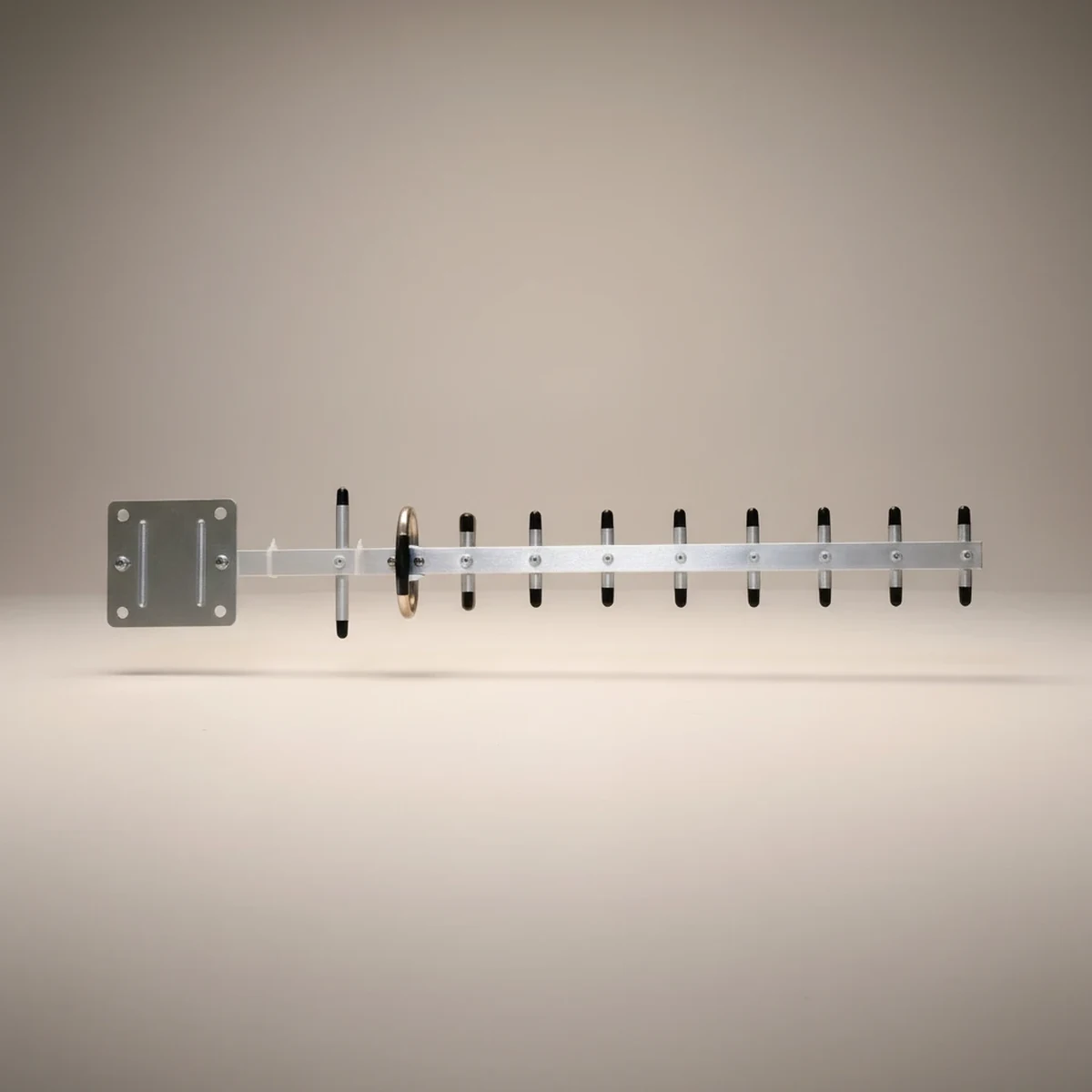
Review these models for industrial IoT and directional RF projects around the 820-890 MHz range.
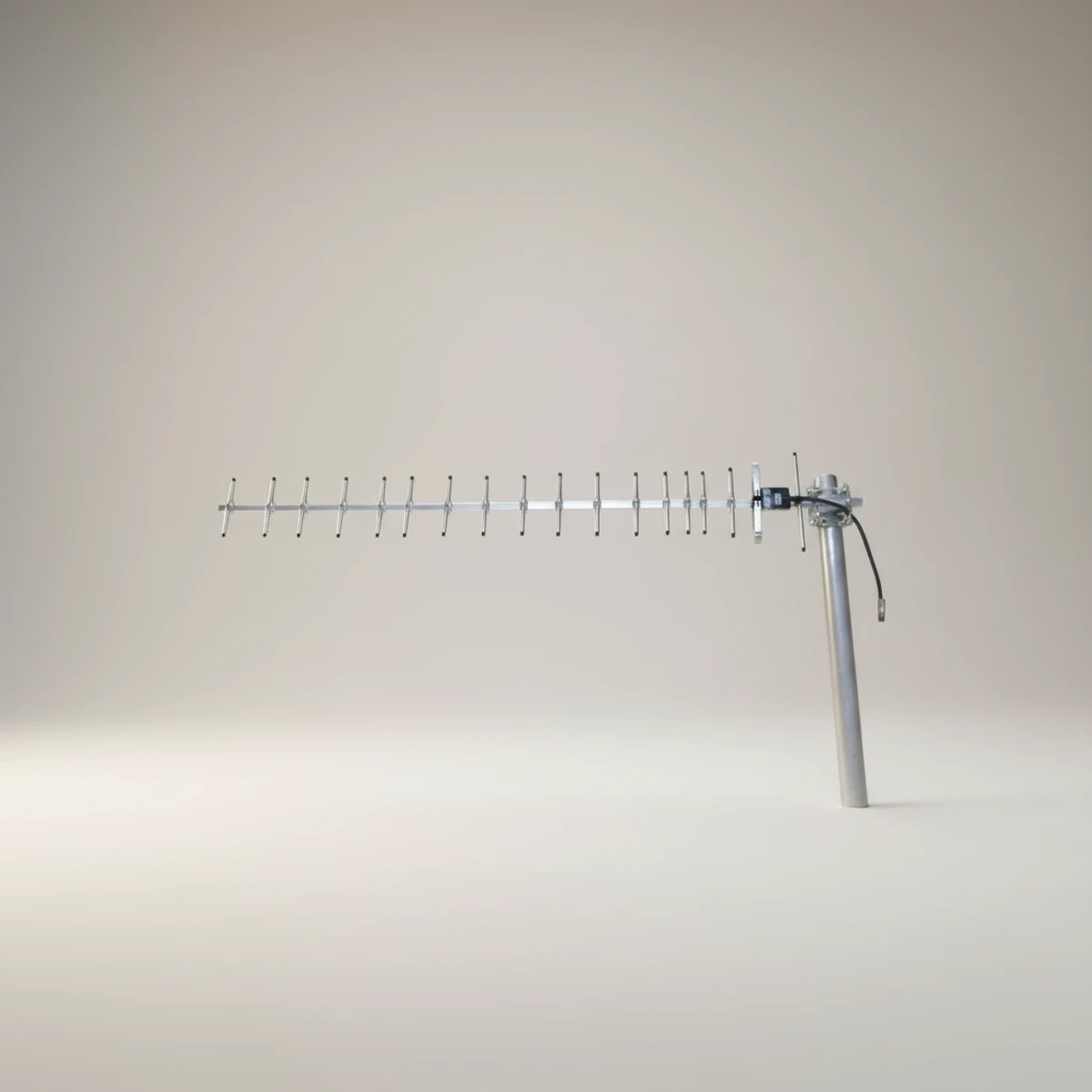
For OEM and batch projects, confirm the connector, cable, mounting and environmental requirements before sampling.
| Model | Frequency range | Listed gain | Connector | Polarization | Good starting point for | Product link |
|---|---|---|---|---|---|---|
| GL-DYJ150B | 134-173 MHz | 9 dBi | UHF or N female | Vertical or horizontal | VHF directional links where moderate gain is enough | View model |
| GL-DYJ150C | 134-173 MHz | 11.2 dBi | UHF or N female | Vertical or horizontal | VHF links that need higher forward gain | View model |
| GL-DYJ150D | 134-173 MHz | 12 dBi | UHF or N female | Vertical | VHF point-to-point or fixed receiving direction | View model |
| GL-DYJ150E | 134-173 MHz | 14.5 dBi | UHF or N female | Vertical | Higher-gain VHF directional installations | View model |
| GL-DY230B | 220-290 MHz | 9 dBi | N female or customization | Vertical or horizontal | 220-290 MHz directional RF links | View model |
| GL-DY230C | 220-290 MHz | 11.2 dBi | N female or customization | Vertical or horizontal | 220-290 MHz links needing more gain | View model |
| GL-DY230D | 220-290 MHz | 12 dBi | N female or customization | Vertical | Fixed 220-290 MHz directional coverage | View model |
| GL-DY230E | 220-290 MHz | 14 dBi | N female or customization | Vertical | High-gain 220-290 MHz directional links | View model |
| GL-DY230Z5 | 223-235 MHz | 8 dBi | SMA male | Vertical | Compact 223-235 MHz projects using SMA connection | View model |
| GL-DYJ350A | 330-390 MHz | 11.2 dBi | N female or customization | Vertical or horizontal | UHF directional links in the 330-390 MHz range | View model |
| GL-DYJ350B | 300-390 MHz | 12 dBi | N female or customization | Vertical or horizontal | Broader 300-390 MHz UHF coverage | View model |
| GL-DYJ350C | 330-390 MHz | 13 dBi | N female or customization | Vertical or horizontal | UHF links that need higher directional gain | View model |
| GL-DYJ350F | 330-390 MHz | 15.7 dBi | UHF or N female | Vertical or horizontal | Higher-gain UHF directional installations | View model |
| GL-DYU4YG12S | 380-470 MHz | Confirm on datasheet | N-Female | Vertical or horizontal | 380-470 MHz UHF directional RF links | View model |
| GL-DYU4YG3S | 380-470 MHz | Confirm on datasheet | N female | Vertical or horizontal | 380-470 MHz UHF links and pole-mounted coverage | View model |
| GLY450 | 450-470 MHz | Confirm on datasheet | TNC | Vertical or horizontal | 450-470 MHz RF systems where TNC is required | View model |
| GL-400AH8 | 433.175-434.665 MHz | 12 dBi | N female or customized | Vertical or horizontal | 433 MHz ISM-band directional links | View model |
| GL868V-11 | 820-890 MHz | Confirm on datasheet | Type N female | Vertical | 820-890 MHz IoT or RF directional projects | View model |
| GL868V-14 | 820-890 MHz | 14 dBi | Confirm on datasheet | Vertical | Higher-gain 820-890 MHz industrial IoT links | View model |
| GL900ACY15 | Confirm before quotation | Confirm before quotation | Multi connector options | Confirm before quotation | Industrial IoT projects needing connector flexibility | View model |
| GL-DY2400Y14 | 2400-2500 MHz | 14.5 dBi | N female | Vertical | 2.4 GHz directional wireless or WiFi-band links | View model |
For final selection, ask for the product datasheet and confirm exact frequency, gain, radiation pattern, VSWR, connector orientation, mounting hardware and environmental rating. Some product records list more complete data than others, so confirm the model against project requirements before ordering samples.
Choose Yagi Antennas by Frequency
VHF Yagi antennas
VHF Yagi antennas are usually selected for lower-frequency RF systems where wavelength is longer and physical antenna size becomes more important. Current VHF-oriented models include the GL-DYJ150 series for 134-173 MHz, with listed gain options from 9 dBi to 14.5 dBi.
UHF Yagi antennas
UHF Yagi antennas are used when a fixed directional link needs more forward gain than an omnidirectional antenna can provide. Current options include 220-290 MHz, 300-390 MHz, 380-470 MHz and 450-470 MHz product records.
433 MHz Yagi antennas
The GL-400AH8 is listed for 433.175-434.665 MHz with 12 dBi gain and N female or customized connector options. It can be considered for fixed 433 MHz links where the system needs stronger signal in one direction.
820-890 MHz and 900 MHz Yagi antennas
For industrial IoT or RF systems around the 820-890 MHz range, review GL868V-11 and GL868V-14. GL900ACY15 is also listed as a Yagi antenna for Industrial IoT, but its public product record should be confirmed before final selection.
2.4 GHz Yagi antennas
A 2.4 GHz Yagi antenna is useful when the radio link is directional and the antenna can be aimed toward the target device, gateway or wireless bridge. GL-DY2400Y14 is listed for 2400-2500 MHz with 14.5 dBi gain and an N female connector.
Custom frequency and connector review
If the available product record is close but not exact, send the required band, gain target, connector, cable length, mounting limit and installation environment. The engineering team can confirm whether an existing model or custom Yagi antenna is more suitable.
How to Choose the Right Yagi Antenna
- Confirm the exact operating frequency. If the antenna does not cover the radio band, higher gain will not solve the problem.
- Match polarization. The transmitting and receiving antennas should normally use the same polarization. Some models list vertical or horizontal polarization, while others list vertical only.
- Check required gain and beamwidth. Higher gain can improve link budget, but it also narrows the beam and makes alignment more important.
- Confirm connector and cable route. N female, UHF, TNC, SMA and custom connector options appear across different models.
- Review mounting and environmental limits. Outdoor directional antennas need suitable mounting hardware, corrosion resistance, wind exposure review and temperature range confirmation.
- Ask for datasheet-level details before production. For OEM or batch projects, request the datasheet, radiation pattern, mechanical drawing and sample confirmation before locking the model.
When a Yagi Antenna Is the Right Choice
A Yagi antenna is a good fit when the RF path is directional and the target area is known. It is commonly used for fixed point-to-point links, directional receiving, pole-mounted outdoor coverage, industrial telemetry and IoT gateway communication.
Yagi is usually not the first choice when the system needs 360-degree coverage, when devices move around the site, or when the installation cannot be aimed accurately. In those cases, an omnidirectional antenna, panel antenna, sector antenna or LPDA antenna may be easier to integrate.
For hops beyond what a Yagi can close, a 2.4 or 5 GHz parabolic dish concentrates the same transmit power into a far narrower beam — at the cost of a rigid mount and a careful alignment pass.
| Antenna type | Better fit when | Main trade-off | Related resource |
|---|---|---|---|
| Yagi antenna | The target direction is known and directional gain matters | Narrower beam, needs alignment | What is a Yagi antenna? |
| Panel antenna | The project needs compact directional coverage with a broader pattern | Usually lower directivity than a comparable high-gain Yagi | Panel antenna vs Yagi antenna |
| LPDA antenna | The project needs wideband directional coverage | Larger structure and different gain behavior by band | Yagi vs LPDA antenna |
| Omnidirectional antenna | The system must cover devices in many directions | Less forward gain in one target direction | Browse antenna products |
Custom Yagi Antenna Manufacturing Support
Global RF Tech can support Yagi antenna projects where the standard product record is close to the requirement but the final installation needs review. For OEM, ODM or batch supply projects, send the operating band, target gain, radio model, connector, cable route, mounting method, environment and sample quantity.
As a Yagi antenna manufacturer and supplier, Global RF Tech can help compare existing models, confirm whether connector or mounting customization is possible, and prepare samples for project validation.
FAQ
What is a Yagi antenna used for?
A Yagi antenna is used for directional RF communication where the signal needs to be focused toward a target direction, such as point-to-point links, industrial telemetry, remote monitoring and fixed wireless installations.
Is a Yagi antenna directional?
Yes. A Yagi antenna is directional, which means it concentrates energy in one main direction instead of radiating evenly in all directions. This can improve link performance when the antenna is aligned correctly.
How do I choose the right Yagi antenna frequency?
Choose the Yagi antenna frequency by matching the antenna operating range to the radio band first. After frequency is confirmed, compare gain, polarization, connector, cable route, mounting method and environmental rating.
What is the difference between a VHF Yagi antenna and a UHF Yagi antenna?
A VHF Yagi antenna is designed for lower-frequency VHF bands and is usually physically larger for a similar gain target. A UHF Yagi antenna works at higher UHF frequencies and is often more compact for the same type of directional link.
Can a Yagi antenna be used for 2.4 GHz WiFi?
Yes, a 2.4 GHz Yagi antenna can be used for directional WiFi-band or 2400-2500 MHz wireless links when the system, connector and installation plan match the antenna. For WiFi projects, confirm legal power limits, cable loss and alignment before deployment.
What is the difference between a Yagi antenna and a panel antenna?
A Yagi antenna is typically chosen for stronger directional gain and a narrower beam. A panel antenna is often more compact and may offer a broader directional coverage area. The better choice depends on the target area and installation constraints.
Can Global RF Tech customize a Yagi antenna?
Global RF Tech can review custom Yagi antenna requirements including frequency range, connector, cable, mounting method and mechanical limits. Send the target band, radio model and installation details for engineering review.
Need help choosing a Yagi antenna?
Send your frequency, gain, connector, cable and installation requirements. Our team will help compare suitable Yagi antenna options for your RF project.
