
4G / LTE Antennas · Cellular
4G LTE Antenna Types and Selection for Routers, IoT and Infrastructure
4G and LTE antennas spanning compact terminal designs, external router antennas and high-gain outdoor systems. Choose by supported bands, installation type and RF connector.
4G LTE antenna types
These are the nine types of 4G LTE antenna we build, covering the cellular antenna types used worldwide on 2G, 3G and 4G bands — 698-960 MHz low band and 1710-2700 MHz high band — for routers, gateways, M2M modules and industrial IoT. Every type below links to its models or category.
Cellular antenna fit
Need the right cellular antenna for your router, gateway or device?
Share the modem type, frequency bands, MIMO ports, mounting environment and cable length. We can recommend suitable 4G, 5G or MIMO antenna options.
Featured antennas
A selection from our catalog — every model is available for OEM/ODM band tuning, connector and branding options.
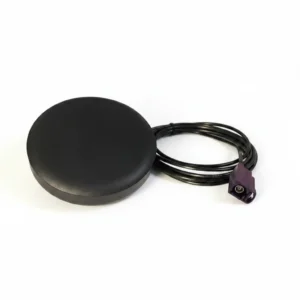
GL-DY003-4G
- Frequency 698-960 / 1710-2690 MHz
- Gain Project dependent
- Connector SMA male
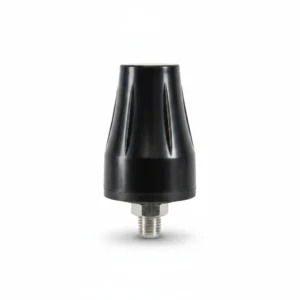
GL-DY058-4G
- Frequency 824-960 / 1710-2670 MHz
- Gain 2 dBi
- Connector Configurable
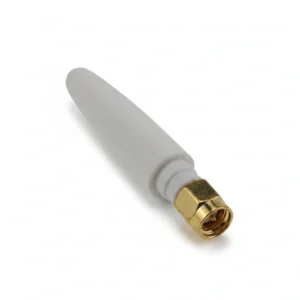
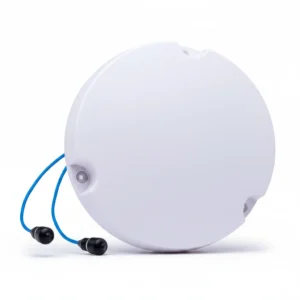
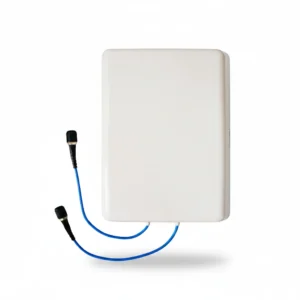
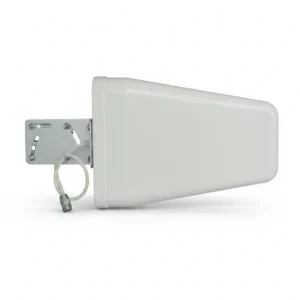
GL-DY8027V11
- Frequency 695-2700 MHz
- Gain 10 / 11 dBi
- Connector N-K
Specification comparison
Match the band and coverage first, then gain and connector. Full datasheets are on each product page.
| Model | Type | Frequency | Gain | Connector |
|---|---|---|---|---|
| GL-DY003-4G | Screw-mount cellular antenna | 698-960 / 1710-2690 MHz | Project dependent | SMA male |
| GL-DY058-4G | 4G screw-mount antenna | 824-960 / 1710-2670 MHz | 2 dBi | Configurable |
| GL-DY403-4G | 4G rubber duck antenna | 700-2700 MHz | 2.5 dBi | SMA male |
| GL-DY7027HV | 2×2 MIMO omni | 698-2700 MHz | 3 / 4.5 dBi | 2 x N female |
| GL-DY7027S | 2×2 MIMO panel | 698-2700 MHz | 6.5-9 dBi | 2 x N female |
| GL-DY8027V11 | Directional LPDA antenna | 695-2700 MHz | 10 / 11 dBi | N-K |
How to choose
Match the band and coverage shape first, then gain, ports and mounting.
Band support
Verify the operator bands before choosing form factor or gain.
Indoor or outdoor
Compact SMA models suit terminals; N-type models suit longer outdoor links.
Omni or directional
Omni supports variable directions; LPDA and panels focus coverage.
MIMO requirement
Use 2×2 or 4×4 when the LTE modem supports multiple ports.
LTE-Advanced (LTE-A) support
LTE-Advanced and LTE-Advanced Pro are modem features — carrier aggregation and higher-order MIMO — not a separate kind of antenna. The wideband and MIMO antennas on this page already cover what LTE-A asks for: continuous coverage across the bands your modem aggregates, and enough isolated ports for 2×2 or 4×4 MIMO. The LTE vs LTE-Advanced guide explains the details.
| Tier | Carrier aggregation | MIMO (typical) | What the antenna must do |
|---|---|---|---|
| LTE | None | 2×2 | One wideband part, 2 ports |
| LTE-Advanced | Up to 5 carriers / 100 MHz | 2×2, up to 4×4 | Wideband across all aggregated bands, 2 isolated ports |
| LTE-Advanced Pro | More carriers, wider | Up to 4×4 | Same, often 4 ports |
For a multi-port setup, see the 4G LTE MIMO antennas, or send your bands and modem to our engineers and we will match a model.
4G LTE antenna design: what actually matters
Most 4G LTE antenna design questions trace back to one constraint: the band plan spans 698-2700 MHz — nearly a 4:1 range — and the antenna has to stay matched across all of it. That drives the trade-offs you see in this catalog. Low band needs physical size, so compact screw-mount models trade gain for footprint while LPDA and panel designs buy gain with length and aperture. MIMO ports only deliver their throughput when the elements are isolated — roughly half a wavelength apart at the low band — which is why 2×2 housings are wider than they look. And LTE antenna design is linear-polarized end to end (vertical or ±45° slant), so there is no RHCP to worry about, just polarization match between the two ends of the link. If you are weighing these trade-offs for a product, send the band plan and enclosure limits — our engineers run the matching and pattern work in-house.
Engineering guides
Selection and background reading from our RF engineering blog.
Applications
Frequently asked questions
Which bands do your 4G LTE antennas cover?
Wideband models span 698-960 MHz and 1710-2700 MHz to cover the main global 4G/LTE bands, with single-band options where a deployment is fixed.
External LTE antenna or LTE MIMO — which do I need?
A single external LTE antenna suits basic routers; a 2×2 or 4g lte mimo antenna improves throughput and reliability where the modem has two or four ports.
Do you have outdoor and external LTE antennas for fixed sites?
Yes — IP-rated outdoor LTE antennas with pole and wall mounting, plus lte external antenna options with weatherproof cable entry.
Can you build a custom 4G antenna for our product?
As an antenna manufacturer we tune frequency, connectors and cable and handle private labeling from sample to volume.
What types of 4G LTE antennas are available?
Nine common types: external router antennas, panel and directional, omnidirectional, 2×2/4×4 MIMO, LPDA log-periodic, screw-mount low-profile, rubber duck terminal, vehicle mount and embedded IoT antennas. The type grid at the top of this page links each one to its models.
What antenna types are used on a cell tower?
Cell towers use arrays of high-gain sector panel antennas plus microwave backhaul dishes — infrastructure hardware. The antennas on this page are the device side: routers, gateways and IoT terminals that talk to those towers. To reach a distant tower from a fixed site, a directional LPDA or panel antenna is the usual pick.
Custom & OEM/ODM antennas
As an RF antenna manufacturer we tune bands, gain, connectors and branding in-house — with sampling, testing and mass production to RoHS, CE and ISO requirements. Send your bands, gain and environment and our engineers confirm feasibility, lead time and MOQ.
Get the right antenna for your network
Tell us your frequency bands, coverage and MIMO requirement — we will recommend a model and quote it.
Request a free quoteNeed a compact device-mounted option? Compare our rubber duck antennas for cellular routers, modems and wireless terminals by band, gain and connector.
Planning a private LTE deployment?
Start with the exact spectrum plan, radio ports and coverage geometry in our Private LTE and CBRS antenna selection guide.
For 360° horizontal coverage around a fixed site, see our omnidirectional antennas.
