The most common question when a device moves from 4G to 5G is simple: do I have to change the antenna? Sometimes yes, often no. Whether a 4G antenna works on 5G depends almost entirely on one thing — frequency band. If your 5G deployment uses the same spectrum as 4G, a good wideband 4G/LTE antenna usually keeps working. If it uses new mid-band or millimeter-wave spectrum, you need an antenna rated for those frequencies. This guide explains the 4G vs 5G antenna difference in band terms, covers MIMO, and gives you a clear “do I need a new antenna” decision path.
The short answer
5G is not a single new frequency. It is split into two ranges:
- FR1 (sub-6 GHz): roughly 410 MHz to 7.125 GHz. Much of this overlaps existing 4G/LTE spectrum, plus new mid-bands around 3.3–4.2 GHz (n77/n78) and 4.4–5.0 GHz (n79).
- FR2 (millimeter wave): roughly 24–52 GHz. Completely different antenna territory.
So:
- For 5G on re-farmed low/mid bands that 4G already used, a wideband LTE antenna (for example 698–2700 MHz) generally covers it.
- For 5G mid-band above ~3 GHz, you need an antenna rated to that frequency (many LTE antennas stop near 2.7 GHz).
- For 5G mmWave, you need a dedicated mmWave antenna — a 4G antenna cannot reach those frequencies.

4G/LTE vs 5G bands, side by side
| 4G / LTE | 5G NR | |
|---|---|---|
| Typical bands | ~600–2700 MHz | Sub-6 (FR1): 600 MHz–7.1 GHz; mmWave (FR2): 24–52 GHz |
| New spectrum vs 4G | — | Mid-band n77/n78 (3.3–3.8 GHz), n79 (4.4–5.0 GHz), mmWave |
| Antenna reuse | — | Low/mid bands often reuse LTE antennas; new bands do not |
| MIMO | Commonly 2×2 | Frequently 4×4, higher-order MIMO |
| Wideband part covers it? | 698–2700 MHz part covers most LTE | Same part covers 5G only where 5G reuses that spectrum |
The practical takeaway: “5G antenna” is not automatically a different physical product from a “4G antenna.” A broadband cellular antenna that spans the relevant bands can serve both. The split happens when 5G adds spectrum your old antenna was never tuned for.

MIMO: where 4G and 5G antennas really diverge
Bands are half the story. The other half is MIMO — using multiple antenna paths to raise throughput.
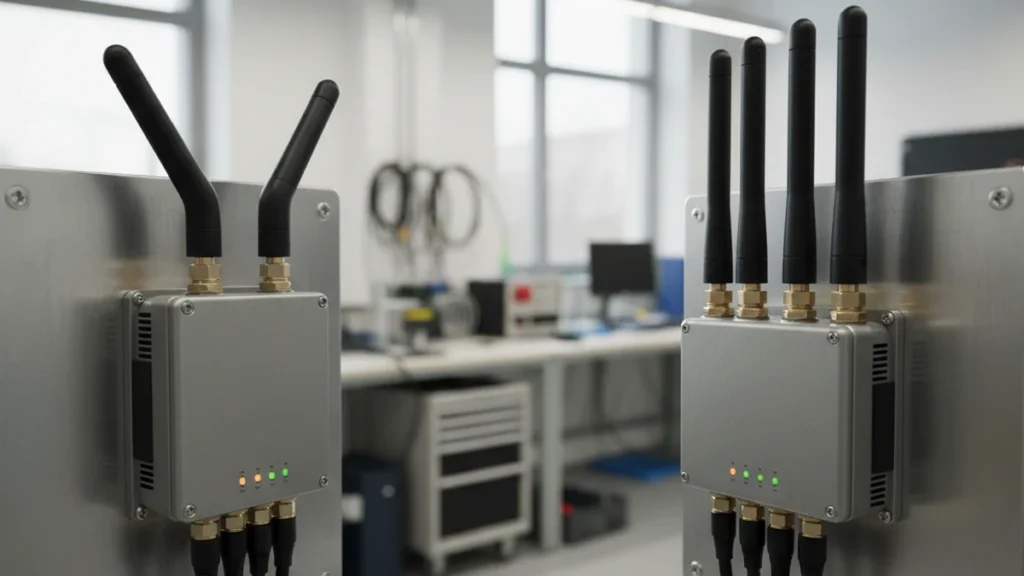
- 4G/LTE devices commonly use 2×2 MIMO (two streams).
- 5G leans harder on 4×4 MIMO (four streams), especially in fixed wireless access (FWA) gateways and routers, because more streams are a primary way 5G delivers higher data rates.
This is why so many 5G installations call for a 4×4 MIMO antenna with four ports and good port-to-port isolation, while a 4G setup may only need two. If you are upgrading a router or gateway to 5G, check whether it expects four antenna ports — that often forces a new antenna even when the frequency bands overlap. For model-by-model options once you know your ports and bands, see our picks for the best 5G MIMO antennas for routers.
Quick check: if the 5G modem has four antenna connectors and your current antenna has two, that alone is a reason to upgrade — regardless of band.

Do you need a new antenna for 5G? A decision path
- Find the 5G bands you must support. Get the n-band list from the modem or carrier.
- Compare to your current antenna’s range. If every target band falls inside your existing antenna’s spec (commonly up to ~2.7 GHz), and the port count matches, you can likely keep it.
- If 5G adds mid-band (3.3–5.0 GHz): you need an antenna rated to that frequency. Most LTE-only parts won’t cover it.
- If 5G adds mmWave (24+ GHz): you need a dedicated mmWave antenna; reuse is not possible.
- Check MIMO order. 2×2 vs 4×4 changes the port count and often the antenna.
- Confirm mounting and gain still fit the install (outdoor pole/wall, connector type, cable loss).
In a lot of real upgrades — especially private LTE/5G and many sub-6 FWA setups on re-farmed spectrum — the honest answer is “your wideband antenna is fine, but you may need more MIMO ports.”
Sub-6 vs mmWave: don’t mix them up
When buyers say “5G antenna,” they usually mean sub-6, because that is what most current FWA, IoT, and router deployments use. mmWave is a different design problem: very high frequency, short range, beamforming, and tight integration — not a drop-in external antenna for a typical gateway. If a vendor lists a single antenna as covering “all of 5G including mmWave,” ask exactly which n-bands and frequencies it is matched for. A wideband sub-6 antenna and a mmWave antenna are not the same part.
Common mistakes
- Assuming “5G” means a new antenna. On re-farmed low/mid bands, your wideband LTE antenna often still works.
- Assuming a 4G antenna covers 3.5 GHz 5G. Many LTE parts stop near 2.7 GHz and are inefficient at n77/n78.
- Ignoring MIMO order. Two ports where the modem wants four leaves throughput on the table.
- Treating mmWave as an external accessory. It is a dedicated, integrated design.
PRODUCT OPTIONS
Compare options for your installation
Check the operating band, connector and installation space before selecting a model.
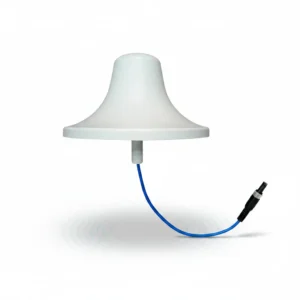
GL-DY6070VV3
Indoor MIMO ceiling antenna with two N-female ports and separate listed cellular bands.
- Bands
- 617–960 / 1350–1550 / 1690–2700 / 3300–4000 / 4900–7125 MHz
- Connectors
- 2 × N female
- Size
- Φ266 × 18 mm
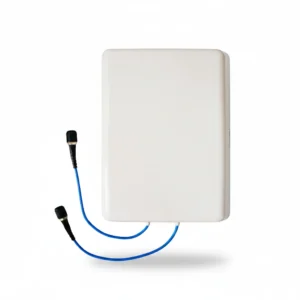
GL-DY7027S
Dual-connector panel antenna for LTE installations.
- Bands
- 698–806 / 806–960 / 1690–2170 / 2170–2700 MHz
- Connectors
- 2 × N female
- Radome
- UV-stabilized ABS
How our cellular antennas map to this
For 4G and the 5G bands that reuse low/mid spectrum, our wideband cellular antennas (for example the GL-DY003-4G screw mount and the GL-DY108/GL-DY131 patch series) span roughly 698–2700 MHz, in screw, magnetic, adhesive, and embedded formats. For multi-stream installs, the GL-DY1727S46513 is a 4×4 MIMO antenna for the 1.71–2.7 GHz range. If your deployment uses 5G mid-band above 3 GHz, tell us the exact n-bands so we can match a part rated for that frequency rather than assume reuse. Browse the 5G / 4G / 3G antenna range or the 4×4 MIMO options, and confirm gain and VSWR per band on the datasheet.
Planning in-building coverage for a dense venue rather than a single router? Our DAS and small cell antenna selection guide covers passive, active, and hybrid nodes.
On the tower side, the same decision runs through sectorization: macro and private-wireless sites split coverage into 120°, 90° or 65° wedges instead of relying on one omni. Our sectorized antenna layout guide walks through how 3-, 4- and 6-sector arrays are planned.
FAQ
Can I use my 4G antenna for 5G?
Yes, if your 5G bands fall within the antenna’s rated frequency range and the modem’s port count matches. Many sub-6 5G deployments reuse 4G spectrum, so a wideband LTE antenna keeps working. You need a new antenna for 5G mid-band above ~3 GHz or for mmWave.
What is the difference between sub-6 and mmWave antennas?
Sub-6 (FR1) antennas cover roughly 600 MHz–7 GHz and look much like cellular antennas you already use. mmWave (FR2) antennas operate at 24–52 GHz with beamforming and tight integration — a completely different design that cannot be served by a sub-6 or 4G antenna.
Is 4×4 MIMO needed for 5G?
Many 5G gateways and FWA routers use 4×4 MIMO to reach their rated speeds, so they expect four antenna ports. 4G commonly uses 2×2. Match the antenna’s port count to the modem.
Will a 5G antenna work on 4G?
A wideband cellular antenna that covers the LTE bands will work on 4G as well as on the 5G bands in that range. Always check that the LTE bands you need are inside its spec.
Do I need a new antenna for 5G home internet (FWA)?
Often you need one mainly for the extra MIMO ports rather than for frequency, unless your carrier uses mid-band above ~3 GHz. Check the gateway’s port count and band list first.
Still deciding what to actually buy for a home or router setup? See how to choose a 5G or LTE antenna.
For the terminology behind 4G and LTE labels, see our 4G vs LTE comparison.
Conclusion
The 4G vs 5G antenna decision is two checks, not one: does your antenna cover the 5G bands you need, and does it provide enough MIMO ports? On re-farmed spectrum the answer is frequently “keep the antenna, add ports.” On new mid-band or mmWave it is “new antenna required.” If you can share the n-band list and the modem’s port count, our engineering team can tell you in one reply whether your current antenna survives the upgrade.
Need help choosing a model?
Tell us your operating band, connector and installation constraints. Our team can review the options with you.
Discuss selection & pricingAsk our AI antenna assistant. Enter a keyword or question for a free answer based on this article, Global RF Tech content, and general antenna/RF knowledge.
Do not submit confidential or personal information. Privacy Policy