
Outdoor LoRa gateway antennas · 868 / 915 MHz
Outdoor LoRa Gateway Antennas
Compare documented fiberglass gateway antennas by full operating band, connector, feedline, mounting method and environmental requirements.
Documented outdoor gateway models
The shortlist stays evidence-led: these are the public fiberglass records currently available for gateway review.
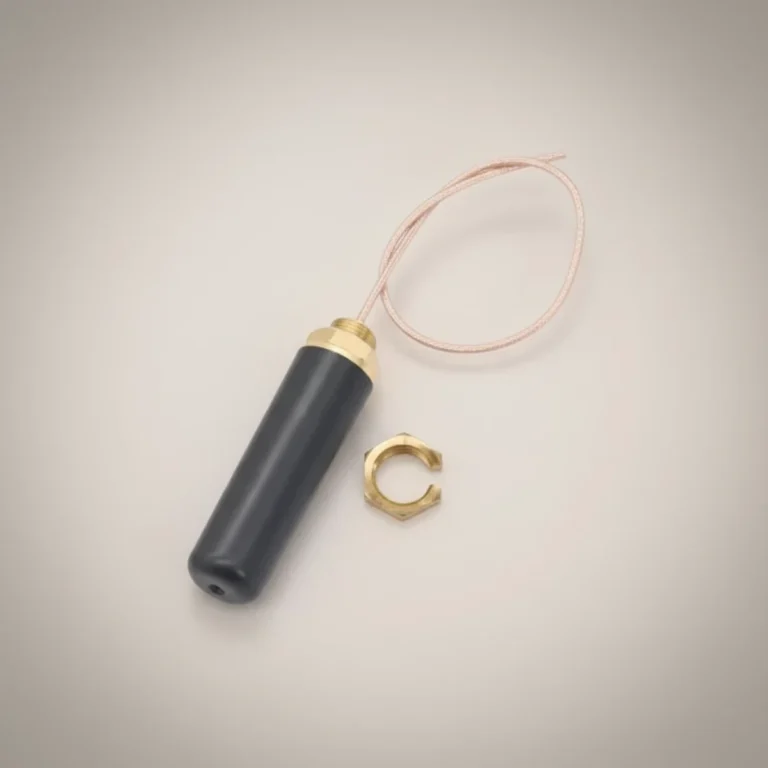
GL868915
- Frequency 868–915 MHz
- Gain 3 dBi
- Connector SMA male
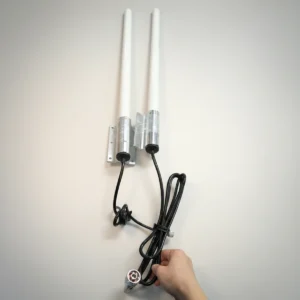
GL868F10
- Frequency 868 ±10 MHz
- Gain Request data
- Connector SMA male
Select an outdoor LoRa gateway antenna by five things: the complete operating band, documented gain, connector and feedline, mounting method, and the environmental protection the site actually requires. Get those five right and the link works; guess at any one of them and the gateway underperforms after installation.
Quick Answer
Start from the gateway radio’s full channel plan, not the “868 MHz” or “915 MHz” label on the box. Confirm the antenna’s connector gender and the feedline that will be installed with it, because the cable is part of the RF path. Choose gain against the real installation geometry — mast height, surrounding structures, and the coverage shape you need — instead of taking the highest number available. Then state the ingress protection, temperature range and mounting hardware the site requires, and match them to a specific model with a supporting document. RFTECH’s current public outdoor options are the GL868915 (868–915 MHz, 3 dBi, SMA male) and the GL868F10 (868 ±10 MHz fiberglass, SMA male); other bands, connectors, gains and IP targets are quoted as project configurations against model-specific documentation.
Step 1: Confirm the Full Operating Band
A LoRa gateway is specified by a regional channel plan, not a single centre frequency. EU868 typically operates around 863–870 MHz, while US915 spans 902–928 MHz. An antenna labelled “868 MHz” only tells you where it is centred; it does not establish usable return loss across the whole plan, nor does it establish regional compliance of the finished system.
The practical rule: write down the lowest and highest channel your gateway will transmit and receive on, then require the antenna record to cover that range. The GL868915 is documented across 868–915 MHz, which suits deployments that need one part number across both regional plans. The GL868F10 is documented as 868 ±10 MHz, which suits EU868-only installations.
Step 2: Match the Connector and Feedline
Both current public models use an SMA male connector. Two mistakes are common here. The first is treating “N-type” or “SMA” as a complete specification when gender and polarity still have to be confirmed — SMA and RP-SMA are mechanically similar and electrically incompatible in practice. The second is ignoring the cable.
At 868 and 915 MHz, thin coax such as RG174 or RG316 loses meaningful signal over a few metres, so a 6 dBi antenna at the end of a long thin feedline can deliver less to the radio than a 3 dBi antenna mounted close to it. If a lightning arrestor sits between the gateway and the antenna, it adds two more interfaces and its own insertion loss.
Specify: connector type and gender at both ends, cable type, cable length, routing, and any arrestor in the chain. If the gateway or protection chain requires N female, send the interface drawing so the assembly is quoted against a real interface rather than a label.
Step 3: Set Gain Against the Real Installation
Gain on an omnidirectional antenna is not free power — it flattens the radiation pattern. A higher-gain fiberglass antenna pushes energy toward the horizon and away from the vertical, which helps flat, open coverage and hurts coverage for nodes directly below a tall mast or on sloped terrain.
- Flat, open, long-range coverage: higher gain, mounted clear of obstructions, with a level mast.
- Urban, hilly, or multi-floor coverage, or nodes close to the mast: moderate gain such as the 3 dBi GL868915, which keeps a fuller vertical pattern.
- Any installation: height and clear line of sight usually change the result more than one or two dB of antenna gain.
The GL868915 is the current public 3 dBi option. The published GL868F10 record does not state a gain figure; request the measurement data with your RFQ if that number drives the decision.
Step 4: Define Mounting and Environmental Requirements
Fiberglass describes the radome material. It is not an ingress-protection rating, a UV rating, a wind rating, or a lightning-protection system. Those are separate, testable requirements, and each one has to be matched to a model with a supporting document before it belongs in a quotation.
For the installation review, define the mast or bracket diameter, mounting height, whether the antenna is pole-, wall- or cabinet-mounted, the cable outlet direction, the temperature range, and the wind and corrosion conditions at the site. A coastal or industrial site changes material and sealing requirements even when the RF requirement is unchanged.
Compare Documented Models
| Model | Operating band | Gain | Connector | Construction | Typical fit |
| GL868915 | 868–915 MHz | 3 dBi | SMA male | Fiberglass, screw mount | One part number across EU868 and US915; installations needing a fuller vertical pattern |
| GL868F10 | 868 ±10 MHz | Request measurement data | SMA male | Fiberglass | EU868-only gateways where the band is narrow and fixed |
The table is deliberately short. It lists what the public records support, rather than padding the page with same-frequency variants. For requirements outside these two records — N female interfaces, higher gain, specified IP ratings, defined cable assemblies — RFTECH quotes against model-specific documentation and supplies the drawing or test evidence with the offer.
Common Mistakes
- Buying by the frequency label. “868 MHz” does not confirm coverage of the full regional channel plan. Check the band edges.
- Treating outdoor construction as an IP rating. Ask for the rating and the document that supports it.
- Ordering by connector family only. Confirm gender and polarity; SMA and RP-SMA are not interchangeable.
- Ignoring feedline loss. A long, thin cable can cancel out the gain you paid for.
- Maximising gain by default. High gain narrows vertical coverage and can drop nodes near the mast.
- Leaving the arrestor out of the plan. It adds interfaces, loss, and a grounding requirement.
- Mounting low or against metal. Height and clearance usually dominate over specification differences.
What the Gateway Is Talking To
The gateway antenna is only half the link. The node end has its own constraints, and they differ a lot by application. These guides cover the device side of the same network:
- Smart metering — 868 MHz antennas inside water, gas and electricity meters.
- Smart agriculture — 915 and 868 MHz field sensors, soil probes and livestock trackers.
- Industrial monitoring — tank level and vibration sensors mounted on metal.
- Asset and cold chain tracking — sealed trackers that have to survive -40 °C.
- Smart parking sensors — in-ground and kerbside units under vehicles.
- Custom LoRa antennas — when the band, cable or connector is not standard.
If the link is short despite a correct antenna at both ends, work through the LoRa gateway range troubleshooting guide before changing hardware.
What to Send for an Outdoor LoRa Antenna RFQ
- Target country and complete operating band.
- Gateway radio or module and its antenna-port connector.
- Required connector gender and any lightning-arrestor interface.
- Feedline type, length and routing.
- Target gain or the coverage geometry you need.
- Mounting method: mast, wall, cabinet, or direct to the gateway.
- Required IP rating, temperature range, wind and material requirements.
- Quantity and the datasheet, drawing or test evidence you need with the offer.
This lets the team separate a documented standard option from a project configuration, and quote each on the right basis.
FAQ
Will an 868 MHz antenna work on US915?
Not reliably. An antenna centred on 868 MHz with a ±10 MHz band does not cover 902–928 MHz. Use a part documented across both ranges, such as the GL868915, or a dedicated 915 MHz part.
Is a fiberglass outdoor antenna automatically IP67?
No. Fiberglass is the radome material. An IP rating is a separate tested characteristic and must be confirmed per model.
Can I get an N female version?
Send the interface drawing with your requirement. The two current public models are SMA male; N female builds and cable assemblies are quoted as project configurations with the interface confirmed in writing.
How much gain do I need?
Define the coverage shape first. Flat, open sites benefit from higher gain; hilly, urban or tall-mast sites usually perform better with moderate gain such as 3 dBi.
Does cable length really matter at 868 MHz?
Yes. Thin coax loses several dB over a few metres at these frequencies. Specify the cable with the antenna and keep the run as short as the installation allows.
For the wider product family, review LoRa and LoRaWAN antennas.
Discuss an Outdoor LoRa Gateway Project
Send your band, gateway connector, feedline, mounting and environmental requirements. RFTECH will match them against the available records, supply the supporting drawing or test data, and confirm any connector or IP detail before sampling or production.
Discuss an outdoor LoRa gateway project
Send the complete band, gateway connector, feedline, mounting and environmental requirements for an evidence-backed shortlist.
