
Magnetic-mount antennas for cellular, IoT and radio
Magnetic-Mount Antennas for Cellular, IoT and GNSS
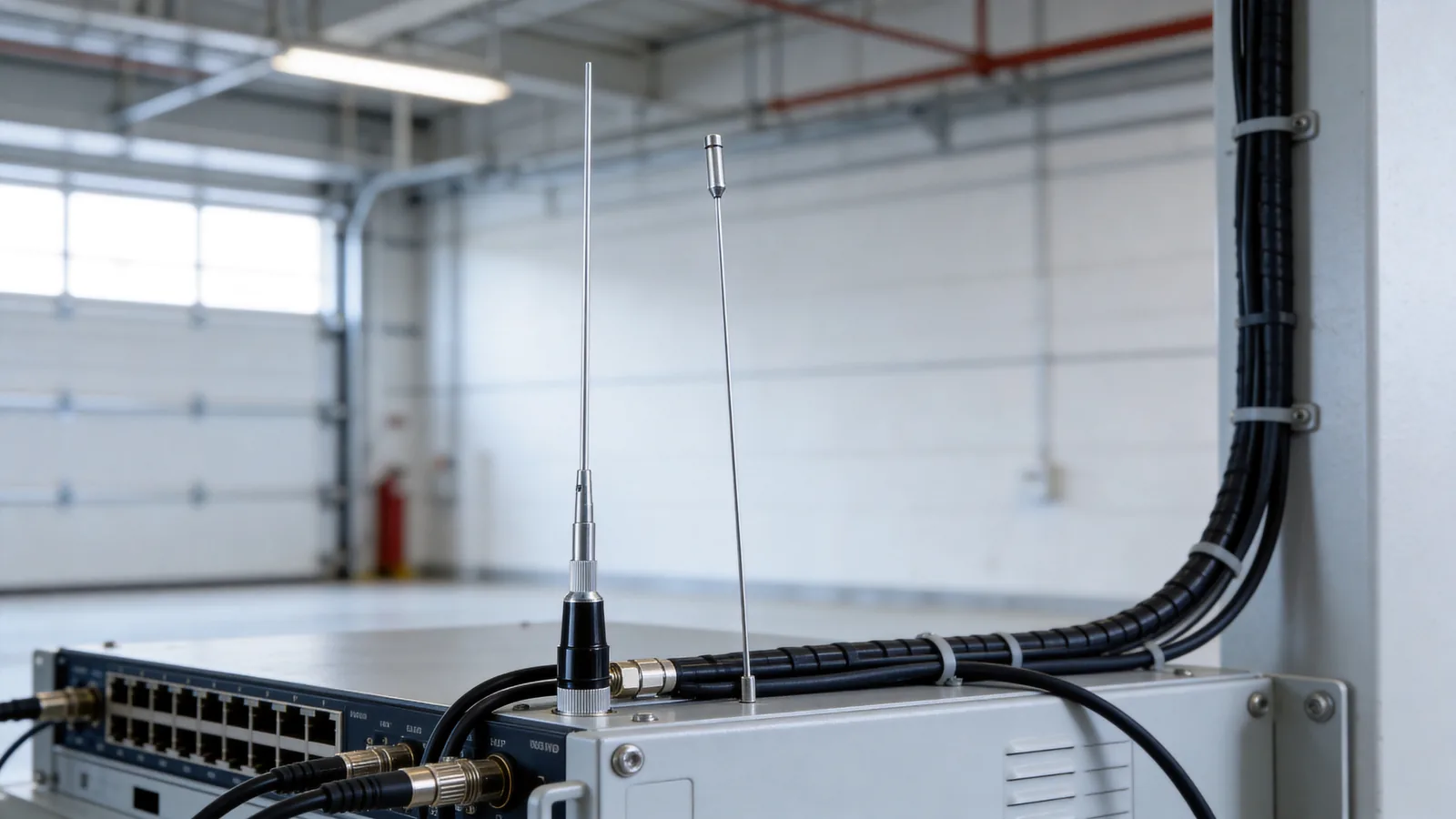
A magnetic-mount antenna belongs where you cannot drill and the antenna still needs a conductive surface underneath it. Four things decide the choice: the bands your radio actually uses, the connector on the device, the cable length and what the antenna sits on. Below are 19 documented models from 400 to 6000 MHz.
Products
Documented magnetic-mount antennas
Start with the frequency band, then check connector, cable and mounting surface. Values that are not published are marked to be confirmed and clarified per project — we do not infer them from the housing.
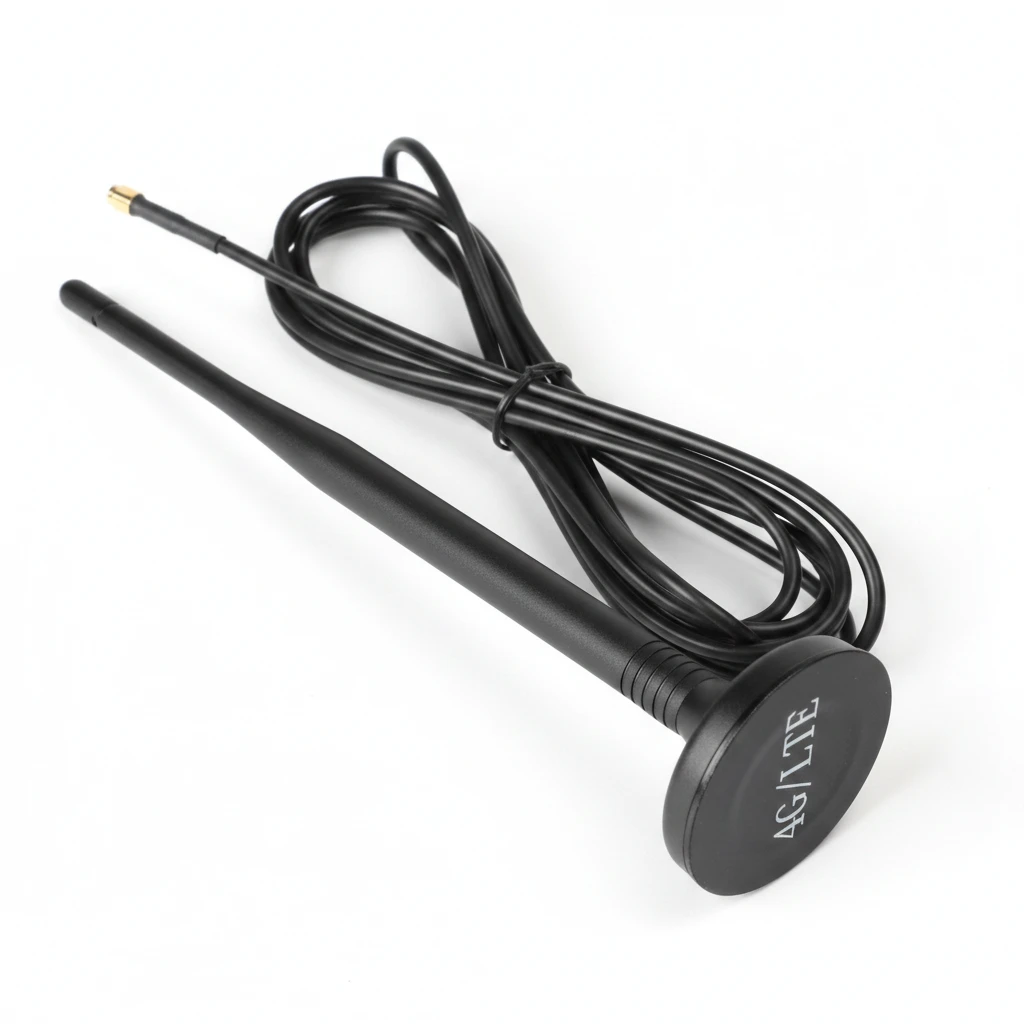
GL-DY284DT
A wideband starting point for routers that use LTE and 5G bands together. The documented 3 m RG174 cable moves the antenna out of a metal enclosure or an unfavourable indoor position.
700–6000 MHz · linear · SMA male · RG174, 3 m · magnetic base
GL-DY284XCT
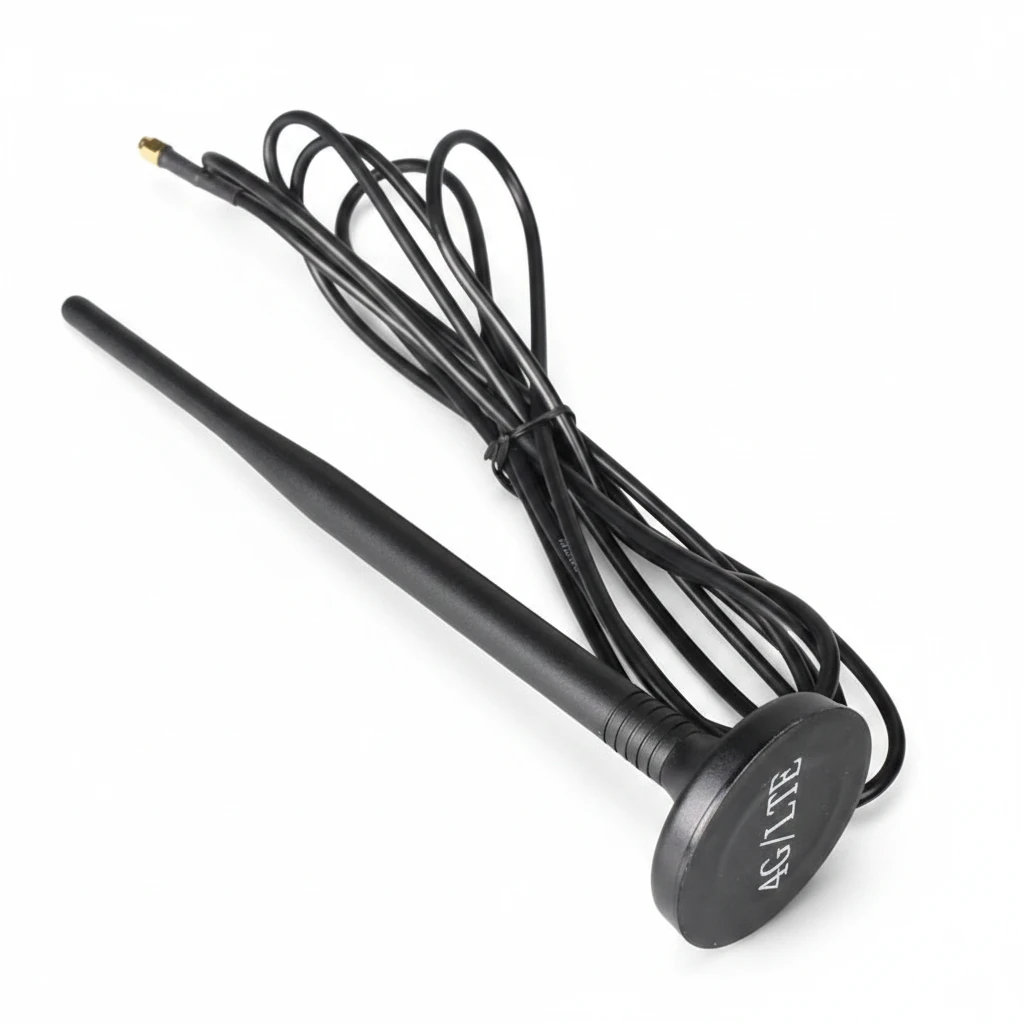
Higher published gain inside 700–2700 MHz, paired with 7 m of RG58 rather than a thin cable. 5G midband around 3.5 GHz is not covered.
700–2700 MHz · linear · SMA male · RG58, 7 m · magnetic base
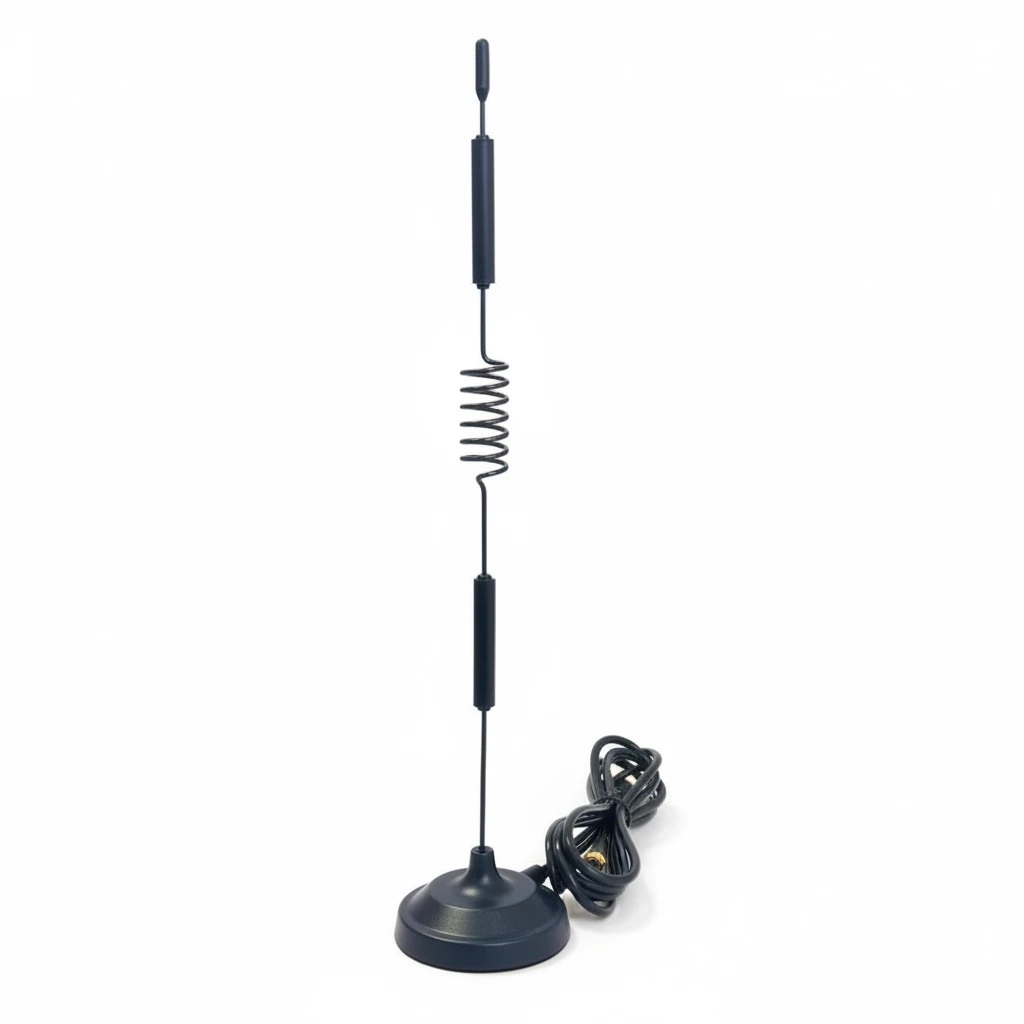
GL-DY828
A compact cellular version with a straight SMA connector for direct attachment at the device. The published bands cover LTE and the classic cellular ranges.
800–960 / 1710–2700 MHz · vertical · SMA straight · Ø 37 × 180 mm · magnetic base
GL822-868
The most compact magnetic base in this range, for LoRa nodes and cabinet-mounted gateways. European limits on radiated power and duty cycle apply across 863–870 MHz.
868 MHz · linear · SMA male · 29.4 × 89 mm · magnetic base
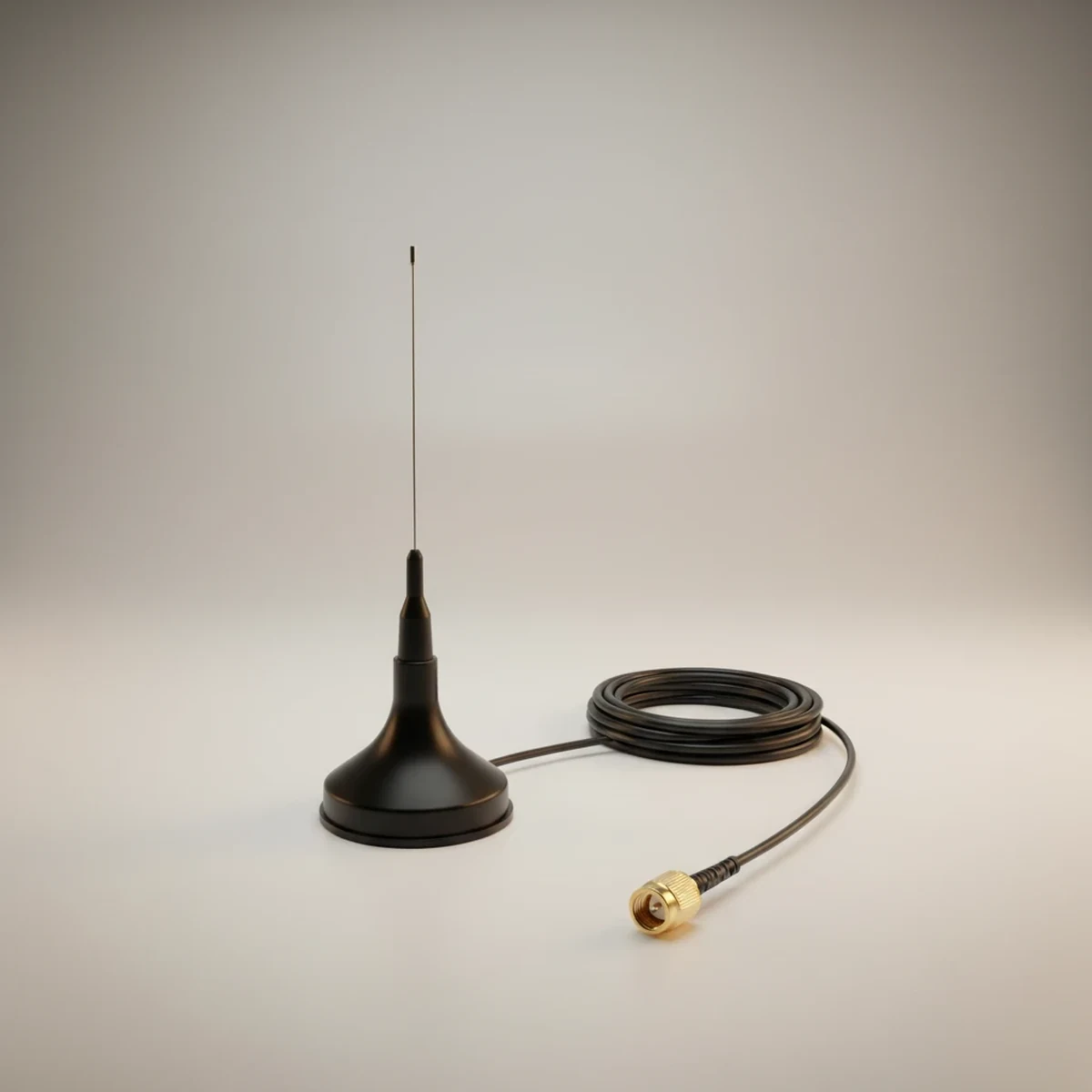
GL400DIV
The NMO version for fleet vehicles: the base stays on the vehicle and the whip is changed. Useful when the frequency range can shift during service life.
400–490 MHz · vertical · 3/8″ NMO · 5.5 dBi · magnetic base
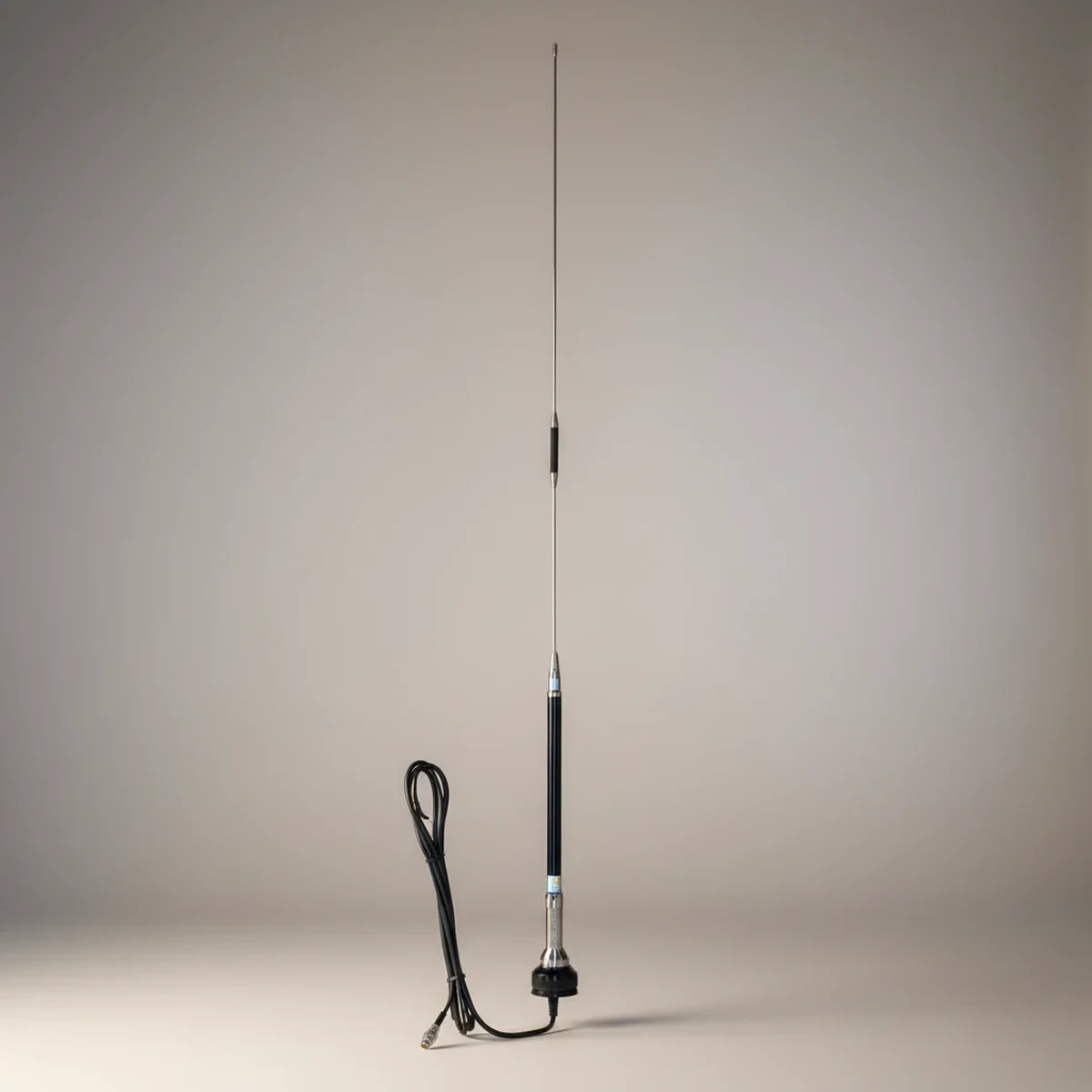
GL-DY008
GNSS positioning for telematics and fleet applications. RHCP polarization and a low-profile housing intended for vehicle roof mounting.
1575.42 ±1 / 1601–1610 MHz · RHCP · SMA male · 50 × 37 × 17 mm · magnetic base
Specification comparison
The table carries published values only. Where a value is missing it says to be confirmed. Every model with a published figure is documented for −40 °C to +85 °C, except GLR400ZJ at −40 °C to +65 °C.
| Model | Frequency range | Gain | Connector | Cable | Details |
|---|---|---|---|---|---|
| GL-DY284 | 700–6000 MHz | 5 dBi | SMA male | to be confirmed | View model |
| GL-DY284DT | 700–6000 MHz | 5 dBi | SMA male | RG174, 3 m | View model |
| GL-DY284XCT | 700–2700 MHz | 7–9 dBi | SMA male | RG58, 7 m | View model |
| GL-DY828 | 800–960 / 1710–2700 MHz | ≥ 4,0 dBi | SMA straight | to be confirmed | View model |
| GL-DY016 | 698–960 / 1710–2690 MHz | to be confirmed | SMA male | to be confirmed | View model |
| GL-DY091 | 3400–3600 MHz | 5 dBi | SMA male | to be confirmed | View model |
| GL-DY016W-2400 | 2400–2483.5 MHz | 3 dBi | SMA male | to be confirmed | View model |
| GL822-868 | 868 MHz | 3 dBi | SMA male | to be confirmed | View model |
| GL8681 | 863–870 MHz | 3 dBi | SMA male | to be confirmed | View model |
| GL089-868 | 868 MHz | 3 dBi | BNC | to be confirmed | View model |
| GL-DY089 | 868 MHz | 3 dBi | BNC | RG174, 3 m | View model |
| GL090-868 | 868 MHz | to be confirmed | BNC | to be confirmed | View model |
| GL-DY829 | 433 MHz | ≥ 2,0 dBi | SMA male | RG174, 3 m | View model |
| GL400-N | 400–490 MHz | 5.5 dBi | SMA | to be confirmed | View model |
| GL400DIV | 400–490 MHz | 5.5 dBi | 3/8″ NMO | to be confirmed | View model |
| GLR400ZJ | 433.175–434.665 MHz | ≥ 6 dBi | M male | to be confirmed | View model |
| GL-DY008 | 1575.42 ±1 / 1601–1610 MHz | to be confirmed | SMA male | to be confirmed | View model |
| GL-DY001 | 1575.42 ±1 / 1601–1610 MHz | to be confirmed | FAKRA C (blue) | to be confirmed | View model |
| GL-DY002 | 1575.42 ±1 / 1601–1610 MHz | to be confirmed | SMA plug / MCX | to be confirmed | View model |
How to choose in six steps
The antenna is decided by the radio module and the installation, not by the label on the box.
Take the bands from the device datasheet
Not the marketing label — the full band list. An antenna that stops at 2700 MHz does not cover 5G midband at 3.4–3.8 GHz. See what antenna gain means before comparing figures.
Check the connector on the device
Note type and gender. SMA and RP-SMA will screw together without forming an RF connection. Overview at antenna connector types.
Measure the cable run, then pick the cable
From the antenna position to the radio, including strain relief and any pass-through. Attenuation rises with frequency and length, so choose the type after the route is known.
Check the mounting surface and ground plane
Material, size and curvature. A monopole works against the conductive surface; on plastic, glass or wood the counterpoise is missing. See the antenna ground plane guide.
Set the mechanical constraints
Whip length, vehicle speed, vibration and temperature. The longer the whip, the larger the tipping moment in airflow. Background at roof-mounted vehicle antennas.
Approve samples in the target installation
Sign-off belongs in the real build, not on a lab bench. For omnidirectional coverage trade-offs see how to choose an omni antenna.
Frequently asked questions
Does a magnetic-mount antenna need a ground plane?
As a rule, yes. The radiator works against the conductive mounting surface as its counterpoise. Published VSWR and gain values apply to the measurement condition over a metal plane; on plastic, glass or wood the match and the pattern shift. See the antenna ground plane guide.
How large does the metal surface have to be?
The working reference is a quarter of the free-space wavelength: roughly 173 mm at 433 MHz, 107 mm at 700 MHz, 86 mm at 868 MHz, 29 mm at 2600 MHz and 21 mm at 3500 MHz. A vehicle roof is comfortably large enough for every band listed here; a 60 × 60 mm steel bracket at 868 MHz is not.
Can I stand the antenna on a wooden bench indoors?
The magnet will not hold there, and electrically the ground plane is missing. For a bench setup, put a metal plate underneath with an edge length of at least the quarter-wavelength figure for your frequency.
What vehicle speed will a magnetic-mount antenna survive?
We do not publish a blanket catalogue rating, because holding force depends on the magnet system, the contact surface, the paint condition and above all the whip length. Tell us the vehicle type, the model and the intended top speed, and we will give you the holding force of that magnetic base and an assessment for that specific installation.
Which connector belongs on a 5G industrial router?
Usually SMA male on the cable, because the device carries an SMA jack. Wi-Fi equipment often uses RP-SMA instead. The two will screw together without producing a working RF connection, so always take type and gender from the device datasheet.
What is the difference between an NMO mount and a fixed magnetic base?
On an NMO mount, base and whip are separate: the base stays on the vehicle and the whip is changed. That suits fleets and changing frequency ranges. A fixed assembly is one piece and intended for a single defined use. Here GL400DIV is the NMO version and GL400-N the SMA version for the same band.
Do you offer magnetic-mount antennas below 400 MHz?
Not in the currently documented catalogue — this magnetic-mount range starts at 400 MHz. For lower bands, ask us directly rather than relying on a housing whose published frequency range does not cover them.
Where do I find other suitable antennas?
For complete router installations see cellular modem and router antennas, for permanent outdoor builds outdoor cellular antennas, for gateways LoRa antennas and for positioning GPS and GNSS antennas.
Ask for the right magnetic-mount antenna
The more complete the inputs, the more specific the recommendation.
- Device model and the full band list
- Connector type and gender on the device
- Required cable length and preferred cable type
- Mounting location, surface material and available contact area
- Vehicle type and top speed, if the install is mobile
- Temperature, weather and vibration requirements
- Whether you need documented holding force, magnet diameter or ingress protection
- Project quantity and any drawings, datasheets or test records you require
Global RF Tech designs and manufactures in China and supplies customers worldwide. Price, availability, order quantity and delivery are confirmed on a per-project basis only.
